
Choosing a role without evaluating culture can feel like signing a contract for your future mood, because the team environment shapes your daily reality more than the job title.
Using a structured approach helps you avoid toxic environments, since culture fit is best judged with evidence, not optimism.
How to evaluate company culture by understanding what “culture” really is
Company culture is the set of repeated behaviors that people get rewarded for, tolerated for, or punished for, even when the official values say something nicer.
A healthy culture makes good work easier, because clarity, feedback, and fairness reduce friction and let you focus on outcomes rather than politics.
Toxic culture makes simple tasks feel heavy, because fear, blame, or chronic urgency forces you to spend energy protecting yourself instead of building.
Perks are not culture, since free snacks and fun events cannot compensate for disrespect, unclear expectations, or constant boundary violations.
Values are not culture either, because values are promises while culture is what actually happens when deadlines hit and mistakes occur.
Culture fit is not about “being similar,” because the goal is alignment with healthy practices like psychological safety, accountability, and respectful communication.
Team culture often matters more than company culture, because your manager and close peers define your day-to-day norms and your stress level.
Evaluating culture is risk management, because one wrong environment can cost months of energy, confidence, and momentum even if your skills are strong.
- Healthy cultures tend to produce clarity, because decisions and expectations are explained in plain language rather than hidden behind vague statements.
- Unhealthy cultures tend to produce confusion, because you are expected to read minds, tolerate shifting priorities, and accept blame when systems fail.
- Strong team environments feel predictable, because people follow consistent rules about workload, respect, and ownership.
- Weak team environments feel volatile, because the “rules” change depending on who is in the room and what mood leadership is in.
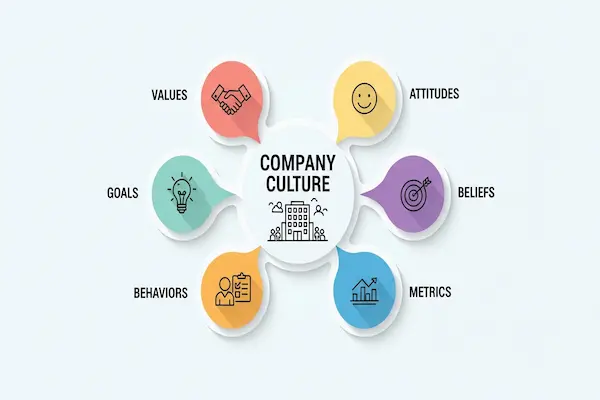
Culture fit versus comfort: what you should be aiming for
Comfort is not the right goal if it means never being challenged, because growth usually requires stretch and honest feedback.
Safety is the right goal when it means dignity, fairness, and boundaries, because you can handle challenge when you are not also handling disrespect.
High standards can be healthy, because demanding work is manageable when priorities are clear and support is real.
Pressure can still be toxic, because pressure without control, clarity, or recovery quickly becomes chronic stress.
Alignment means your values and needs match the environment, because even a “good” culture can be wrong for you if the pace or structure conflicts with how you thrive.
How to evaluate company culture before interviews using early signals
Early signals matter because interviews are short and curated, so you want to arrive with hypotheses that you can test rather than starting from zero.
Job descriptions reveal priorities through language, because the words chosen often reflect how leaders think about people and performance.
Patterns across multiple job postings can show churn, because constant hiring for the same roles may hint at retention problems or unrealistic expectations.
Leadership messaging can expose norms, because leaders model what “good” looks like and employees usually adapt to survive.
Process transparency is a clue, because organizations that respect candidates often respect employees with similar clarity.
Language clues inside job descriptions that affect culture fit
“Fast-paced” can mean energizing momentum, yet it often means understaffing and constant urgency, so you should ask what makes it fast and whether the pace is sustainable.
“Wears many hats” can mean variety, yet it often means unclear scope and weak prioritization, so you should ask how trade-offs are decided and who protects focus.
“Must handle ambiguity” can mean autonomy, yet it sometimes means leadership avoids decisions, so you should ask how ambiguity is reduced and how decisions get documented.
“Rockstar” language can signal ego and hero culture, so you should ask how teamwork, documentation, and sustainable delivery are rewarded.
“Family” language can be a red flag, because it can blur boundaries and normalize guilt-based loyalty, so you should ask how time off and workload limits are handled.
- Pay attention to whether the posting describes outcomes, because outcome clarity usually correlates with better role clarity and less chaos.
- Notice whether collaboration is described concretely, because real teams can explain who you work with and how decisions flow.
- Watch for vague responsibility lists, because vagueness can hide unrealistic expectations and shifting ownership.
- Look for signals about feedback and growth, because learning cultures typically name mentorship, review cycles, or development practices.
Website and public messaging signals worth noticing carefully
Consistency between stated values and observed behavior is more important than polished statements, because marketing copy is easy while accountability is hard.
Stories about how the company handles mistakes can be revealing, because blame cultures avoid these stories while learning cultures describe what changed afterward.
Leadership tone matters, because leaders who communicate with humility and clarity often create healthier team environments than leaders who communicate with bravado and vagueness.
Transparency about work model and expectations is a practical signal, because evasiveness about workload, overtime, or on-call realities can indicate hidden pressure.
Representation in leadership and visibility in decision-making can matter, because cultures often mirror who holds power and whose voices are taken seriously.
Culture checklist: the dimensions that predict your daily team environment
Using a checklist prevents you from being swayed by charisma, because a friendly interviewer can still represent a system that quietly harms people.
Culture dimensions should be observable, because you want criteria you can test with questions, stories, and patterns rather than hoping your “gut feeling” is accurate.
These categories are designed to be scored, because scoring makes trade-offs visible and reduces second-guessing when options are close.
Culture checklist categories
- Psychological safety: people can ask questions, disagree respectfully, and admit mistakes without fear of humiliation or punishment.
- Role clarity: expectations, priorities, and success metrics are defined, updated, and communicated consistently.
- Workload sustainability: pace is ambitious but realistic, and recovery is supported rather than treated as weakness.
- Manager quality: your manager provides clarity, feedback, protection from chaos, and advocacy when needed.
- Communication norms: decisions are documented, meetings have purpose, and information is not hoarded as power.
- Decision making: trade-offs are explicit, ownership is clear, and changes are communicated with reasons.
- Feedback and growth: feedback is specific and regular, and development is supported through coaching or opportunity.
- Fairness and recognition: credit is assigned fairly, promotions are explainable, and favoritism is not the operating system.
- Conflict handling: disagreements are handled directly and respectfully, not through gossip or silent punishment.
- Ethics and respect: boundaries are honored, harassment is not tolerated, and “results” do not excuse harm.
Scoring method: simple, honest, and usable
Scoring should stay simple, because complex systems invite you to manipulate numbers when you already have a preferred outcome.
Use a 1–5 scale where 1 is poor evidence and 5 is strong evidence, because a clear scale makes your notes comparable across options.
Unknowns should be scored as 3 at most, because uncertainty is risk and should prompt follow-up questions rather than optimism.
- Score 5 when you hear consistent, concrete examples from multiple people that match your needs and priorities.
- Score 4 when the signal is positive and specific, yet you have not triangulated it across sources.
- Score 3 when the signal is unclear, mixed, or based on vague claims without examples.
- Score 2 when you notice repeated warning signs, evasive answers, or contradictions between people.
- Score 1 when red flags are obvious and consistent, especially around respect, boundaries, or blame.
Culture checklist template you can copy
Copy this checklist into your notes and fill it during interviews, because memory gets distorted when you are excited or stressed.
| Dimension | Score (1–5) | Evidence I heard or saw | Follow-up question | Risk note |
|---|---|---|---|---|
| Psychological safety | ||||
| Role clarity | ||||
| Workload sustainability | ||||
| Manager quality | ||||
| Communication norms | ||||
| Decision making | ||||
| Feedback and growth | ||||
| Fairness and recognition | ||||
| Conflict handling | ||||
| Ethics and respect |
Interview questions that reveal culture fit without sounding paranoid
Good interview questions focus on real examples, because stories expose what people actually do rather than what they wish were true.
Follow-ups are the real tool, because shallow answers often sound positive while details reveal whether the culture is healthy or performative.
Asking the same theme to different people creates triangulation, because consistent answers across roles usually indicate a stable norm rather than one person’s opinion.
Questions to ask a hiring manager about team environment
- “What does success look like in the first 30, 60, and 90 days, and how do you measure it in practice.”
- “When priorities change, how do you communicate the change, and how do you decide what gets dropped.”
- “Can you share an example of a time the team missed a goal, and what happened afterward.”
- “How do you give feedback when something is not working, and how often do feedback conversations happen.”
- “What kind of person thrives on this team, and what kind of person struggles even if they are talented.”
- Strong signal: the manager describes specific processes, because process clarity usually reflects real leadership habits.
- Weak signal: the manager stays vague or overly positive, because avoidance can indicate discomfort discussing accountability.
- Follow-up: ask who owns trade-offs, because blame often hides inside unclear ownership.
- Follow-up: ask how decisions get documented, because documentation reduces politics and reduces repeated confusion.
Questions to ask potential peers about day-to-day culture
- “How do meetings work here, and which meetings are essential versus optional.”
- “When someone disagrees with a decision, what usually happens, and what is the respectful way to challenge something.”
- “What does a normal week look like when things are going well, and what changes when things get stressful.”
- “How does the team handle after-hours messages, and what is considered urgent.”
- “What would you change about the team environment if you had the power to change one thing.”
- Strong signal: peers can describe norms without fear, because psychological safety often shows up in how comfortable people are being honest.
- Warning sign: peers sound rehearsed, because overly polished answers can indicate fear of speaking openly.
- Follow-up: ask for an example of a hard week, because the stress version of culture is the one you will live with.
- Follow-up: ask how work is divided, because unclear division often creates quiet resentment and hidden overtime.
Questions to ask cross-functional partners about collaboration culture
- “How does this team show up when other teams need something urgently, and how do they set boundaries.”
- “What is it like to work with the hiring manager, especially when priorities conflict.”
- “How do decisions get made across teams, and how are disagreements resolved.”
- “What does good communication look like here, and what causes friction most often.”
- “Which behaviors get rewarded on this team, and which behaviors create problems.”
- Strong signal: partners describe predictable collaboration, because predictable collaboration indicates mature norms and clear ownership.
- Red flag: partners mention constant fire drills, because chronic emergency mode often means weak planning and poor boundary management.
- Follow-up: ask who is accountable for scope, because scope chaos is a common root cause of toxic pressure.
- Follow-up: ask how escalations are handled, because escalation style reveals blame versus problem-solving orientation.
Questions to ask about culture fit in remote or hybrid environments
- “How do you make sure remote employees get the same access to information, opportunities, and recognition as in-office employees.”
- “Which decisions are documented, where are they documented, and how do new people find what they need.”
- “What is the expectation for response time, and what does ‘offline’ mean in practice.”
- “How do you handle time zones and meeting load, and what boundaries are protected.”
- “How do you onboard people so they feel connected, supported, and productive without guessing constantly.”
- Strong signal: clear asynchronous norms exist, because healthy remote cultures reduce meeting dependency and protect focus time.
- Weak signal: “we just figure it out” is the standard, because that often creates silent overload for conscientious people.
- Follow-up: ask how performance is evaluated, because remote ambiguity can become micromanagement when trust is low.
- Follow-up: ask how conflict is handled remotely, because avoidance can become worse when people hide behind screens.
Warning signs and red flags that often predict toxic environments
Red flags are patterns, because one awkward moment might be nothing while repeated signals usually point to a system-level issue.
Subtle warning signs matter, because many toxic environments present well during recruiting and reveal the truth only after you are dependent on the job.
Your goal is not to find perfection, because every workplace has flaws, yet you should avoid predictable harm like disrespect, blame, and chronic boundary violations.
Communication red flags
- Evasive answers about workload appear, because leaders who normalize overwork often avoid admitting it directly.
- Contradictions between interviewers show up, because misalignment and politics often create multiple “realities” in the same team.
- Vague success definitions persist, because unclear expectations make it easier to blame individuals when systems fail.
- Dismissive jokes about stress or burnout occur, because those jokes often reveal what the culture tolerates.
- Pressure to decide quickly intensifies, because urgency can be used to prevent you from investigating risk properly.
Workload and boundary red flags
- Hero culture is celebrated, because praising “always available” employees often means chronic understaffing and weak planning.
- Vacation is described as “hard to take,” because cultures that punish rest tend to punish mistakes while creating the conditions for mistakes.
- On-call expectations are unclear, because ambiguity often becomes unlimited availability once you join.
- Constant reorgs without communication exist, because instability without transparency increases stress and reduces trust.
- High turnover is rationalized casually, because normalization of churn can hide deeper issues like poor management or unfair workload.
Respect and ethics red flags
- Blame is directed at individuals rather than systems, because blame cultures protect leadership image at the expense of employee dignity.
- Gossip is treated as normal, because gossip often replaces healthy conflict resolution and creates fear.
- Boundary violations are framed as commitment, because guilt-based loyalty is a common tool in toxic environments.
- Disrespect is minimized as “just how they are,” because enabling harmful behavior tells you the organization will not protect you when it matters.
- Biased comments or exclusionary jokes appear, because these signals often predict deeper issues with fairness and psychological safety.
Hiring process red flags that predict internal chaos
- Interview scheduling is disorganized repeatedly, because chronic disorganization in recruiting can reflect broader operational dysfunction.
- Role scope changes mid-process without explanation, because shifting scope can be a sign that leadership has not aligned on what they need.
- Key stakeholders are missing from interviews, because misalignment often shows up as missing voices and unclear ownership.
- Feedback loops take forever with no communication, because low respect for candidates can mirror low respect for employees.
- Promises feel bigger than evidence, because vague optimism can be used to cover for the absence of real systems.
How to evaluate company culture by triangulating evidence
Triangulation means you check the same question from different angles, because one source can mislead you while patterns across sources are harder to fake.
Evidence should include people, artifacts, and process descriptions, because healthy cultures usually leave traces in how work is organized and communicated.
Confidence improves when you verify, because the goal is not cynicism and is informed choice.
Use consistent themes across multiple conversations
Repeating core questions helps you compare answers, because you can detect whether the culture is coherent or fragmented.
Clarity about trade-offs is especially revealing, because trade-offs expose who has power and whose time is treated as disposable.
- Ask three people how priorities change, because answers reveal decision making and accountability norms.
- Ask three people what happens after mistakes, because answers reveal psychological safety versus blame.
- Ask three people about workload reality, because answers reveal sustainability and boundary respect.
- Ask three people how feedback works, because answers reveal growth culture versus avoidance.
Request practical artifacts when appropriate
Artifacts are powerful because they are hard to fake consistently, and they reveal how the team thinks and communicates.
- Ask what a good status update looks like, because update standards reveal clarity and decision hygiene.
- Ask how goals are tracked, because tracking reveals whether commitments are real or symbolic.
- Ask what onboarding includes, because onboarding quality reflects how much the team values people’s time and success.
- Ask how documentation works, because documentation norms often correlate with less chaos and fewer politics.
Ethical backchanneling and reference-style checks
Backchanneling should be respectful, because the goal is to learn about team environment, not to gossip or harm anyone.
Signals from former employees can be helpful, yet they should be treated as one data point, because individual experiences vary by manager, timing, and role.
- Ask role-reality questions rather than personal questions, because role-reality reduces drama and increases useful information.
- Seek patterns across multiple perspectives, because a single extreme story can distort your risk assessment.
- Focus on how issues were handled, because even good teams face problems and the response is the true culture.
- Compare stories to what interviewers said, because contradictions often reveal the gap between marketing and reality.
Culture decision matrix: score offers and paths with clarity
A culture decision matrix helps when two options look similar, because numbers make trade-offs visible without pretending feelings do not matter.
Weights help reflect your life season, because priorities change when you are recovering from burnout, supporting family, or optimizing for fast growth.
Unknowns should remain visible, because unknowns are risks that deserve follow-up questions before commitment.
Culture scoring criteria ideas
- Psychological safety and respect, because dignity is the foundation of everything else.
- Workload sustainability, because chronic overload is a common cause of toxic experiences.
- Manager quality, because a strong manager can buffer organizational chaos while a weak manager amplifies it.
- Role clarity and success metrics, because ambiguity often becomes unfair evaluation.
- Decision making and communication, because politics grows where decisions are hidden.
- Feedback and development, because growth cultures invest in people rather than expecting perfection.
- Fairness and recognition, because unfair reward systems create quiet resentment and burnout.
- Boundary respect, because your life outside work is part of sustainability.
- Stability and change management, because unstable environments can be fine when communication is strong and brutal when it is weak.
Culture decision matrix template
| Criteria | Weight (1–3) | Option A Score (1–5) | Option A Weighted | Option B Score (1–5) | Option B Weighted | Evidence notes | Unknowns to clarify |
|---|---|---|---|---|---|---|---|
| Psychological safety | 3 | ||||||
| Workload sustainability | 3 | ||||||
| Manager quality | 3 | ||||||
| Role clarity | 2 | ||||||
| Decision making | 2 | ||||||
| Feedback and growth | 2 | ||||||
| Fairness and recognition | 2 | ||||||
| Boundary respect | 3 | ||||||
| Total |
Worked example: choosing between two teams with different cultures
Imagine Option A offers higher pay and bigger projects, while Option B offers slightly lower pay with stronger boundaries and clearer expectations.
In a season where you are protecting health and rebuilding confidence, weights might prioritize sustainability and psychological safety over prestige and speed.
- Option A could score high on scope, yet score low on workload and boundary respect if travel, late nights, or constant urgency are normalized.
- Option B could score slightly lower on scope, yet score higher on manager quality and sustainability if expectations are clear and overtime is rare.
- A higher total for Option B would not mean Option A is “bad,” because the matrix reflects your priorities and your current risk tolerance.
- Close totals would indicate you need more evidence, because missing data often hides in areas like manager style, team conflict habits, or change management.
Notes template: capture culture signals without relying on memory
Memory gets edited by excitement and relief, because a new opportunity can feel like a rescue even when the environment is not safe.
Structured notes reduce bias, because you capture quotes, examples, and contradictions while the information is fresh.
Consistency becomes easier when you use the same template for every option, because you can compare decisions with less emotional noise.
Copy-ready culture evaluation notes template
CULTURE EVALUATION NOTES (COPY AND FILL)

Option name:
Role:
Team:
Hiring manager:

1) My non-negotiables for culture:
-
-
-

2) What I heard about workload and boundaries:
- Evidence:
- Red flags:
- Questions to clarify:

3) What I heard about psychological safety:
- Example they gave:
- How mistakes are handled:
- My risk note:

4) What I heard about decision making:
- Who decides:
- How trade-offs are documented:
- How priorities change:

5) What I heard about feedback and growth:
- Feedback cadence:
- Coaching or mentorship:
- Promotion expectations:

6) What I heard about fairness and recognition:
- How credit is shared:
- How promotions are decided:
- Any favoritism signals:

7) What I heard about conflict:
- How disagreement is expressed:
- Escalation style:
- Avoidance or gossip signals:

8) My overall culture score (1–10):
- Why I scored it that way:
- What would raise the score:
- What would lower the score:

9) Follow-up questions I will ask next:
-
-
-

10) Decision summary in two sentences:
-
-
How to evaluate company culture when switching teams internally
Internal transfers can feel safer, yet internal politics can create blind spots, because you might assume the company culture is consistent when team environments differ dramatically.
Visibility can be an advantage internally, because you can observe meetings, communication norms, and decision habits before you commit.
Manager reputation can be useful data, because patterns of turnover, burnout, or development often become known inside organizations.
- Ask to shadow a team meeting, because observing how people disagree and decide reveals psychological safety faster than descriptions do.
- Request clarity on success metrics, because internal moves sometimes fail when expectations were assumed rather than documented.
- Talk to cross-functional partners, because partners often reveal whether the team is respectful, responsive, or chaotic.
- Ask about workload cycles, because some teams are stable while others operate in constant emergency mode.
- Confirm the manager’s support for your development, because internal pivots succeed when your manager invests in your ramp.
- Internal red flag: you are discouraged from speaking with future peers, because secrecy often protects dysfunction.
- Internal green flag: the team welcomes questions and offers clear onboarding, because that usually reflects healthy leadership habits.
- Internal reality check: compare what people say to what you can observe, because observation is often more reliable than reassurance.
What to do if you detect warning signs but still need the job
Sometimes you need income stability now, because real life can demand a practical choice even when the culture is imperfect.
Risk can be reduced with boundaries and contingency planning, because a safer exit strategy protects your future even if the environment becomes unhealthy.
Negotiation can also reduce harm, because small changes to scope, expectations, or work model can significantly improve day-to-day experience.
Practical mitigation steps when culture risk exists
- Negotiate clarity in writing, because documented expectations reduce the chance of sudden scope creep and unfair evaluation.
- Ask about workload boundaries explicitly, because vague assurances should be replaced with concrete norms like response times and after-hours expectations.
- Protect recovery time on your calendar, because sustainable performance requires protected blocks for focus and rest.
- Build relationships early, because allies and clarity partners help you navigate conflict without becoming isolated.
- Set a review checkpoint, because a 30- or 60-day evaluation helps you decide whether to commit deeper or begin a safer exit plan.
- Contingency plan idea: keep your resume updated monthly, because quiet maintenance makes future transitions less stressful.
- Contingency plan idea: continue small proof-building projects, because proof protects your confidence and your optionality.
- Contingency plan idea: track red flags objectively, because written patterns help you make decisions without gaslighting yourself.
Pitfalls to avoid when assessing company culture
Overweighting charisma can mislead you, because a charming interviewer can coexist with a system that rewards overwork and punishes honesty.
Assuming culture is the same across teams can backfire, because one manager’s habits can override the best company-level intentions.
Confusing intensity with excellence can create regret, because high standards are healthy while chronic crisis is often just poor planning.
Discounting small disrespect moments is risky, because small disrespect tends to scale up once you are dependent on the job.
Letting fear of being “difficult” silence your questions is costly, because respectful workplaces welcome thoughtful questions and answer them with clarity.
- Asking only general questions leads to vague answers, because general questions invite marketing language rather than real examples.
- Ignoring contradictions increases risk, because contradictions often indicate fragmented culture or power-based “truth.”
- Accepting unknowns as optimism invites surprises, because unknowns should trigger follow-up and documentation.
- Skipping notes makes you forget patterns, because your brain will remember the most emotional moments rather than the most important signals.
Decision-ready checklist: evaluate culture before accepting an offer
Checklists reduce anxiety because you can trust the process, especially when the offer deadline makes your emotions louder than your logic.
Use this checklist in the final stage, because last-mile diligence often prevents months of regret.
- Confirm your non-negotiables are met, because no salary or title upgrade is worth chronic disrespect or boundary violations.
- Score your culture checklist honestly, because honesty now protects your future energy and confidence.
- Triangulate answers across at least three people, because patterns matter more than one perspective.
- Identify unknowns and ask direct follow-ups, because unresolved unknowns are hidden risks.
- Write your top three trade-offs, because naming trade-offs reduces future second-guessing.
- Plan your first 30 days, because early actions help you land well and test whether promises match reality.
- Set a personal checkpoint date, because a planned review helps you act sooner if warning signs intensify.
- Commitment signal: your decision feels grounded in evidence rather than in hope.
- Safety signal: you can explain why the environment is likely to be respectful, not just why the work is exciting.
- Clarity signal: you know what you will do if reality differs from what you were told.
Final note and independence disclaimer
Evaluating culture is not negativity, because it is the professional equivalent of reading the fine print before you commit your time, energy, and identity to a new environment.
Better career choices are easier when you use a culture checklist, ask targeted interview questions, watch for red flags, and capture evidence in a notes template.
Notice: This content is independent and has no affiliation, sponsorship, or control over any institutions, platforms, or third parties mentioned.