
You do not need years of formal experience to look credible.
You need evidence, presented clearly, with a story that makes your work easy to trust.
How to Build Project Portfolio Credibility With Evidence
A project portfolio is not a gallery of screenshots.
A project portfolio is a set of claims, backed by proof, organized for fast evaluation.
If you are a student or junior professional, your portfolio is often your strongest signal.
It shows what you can do when nobody is handing you a job title yet.
The fastest way to earn trust is to lead with evidence.
The second fastest way is to explain your decisions like a responsible professional.
This guide will help you turn projects into clear, credible case studies.
You will leave with structures, checklists, outlines, and copy-and-paste templates.
What reviewers actually want when they open your portfolio
They want to know what you built, for whom, and why it mattered.
They want to see the work quickly without hunting for context.
They want proof you can finish, communicate, and improve based on feedback.
They want results, even if the “results” are learning outcomes, not revenue.
They want honesty about constraints, because real work always has constraints.
What makes a portfolio project “hireable” in education
Education work is judged by clarity, alignment, learner experience, and outcomes.
That means your portfolio should show objectives, activities, assessment, and reflection.
It should also show how you designed for a specific audience and context.
Most importantly, it should show how you evaluate whether learning actually happened.
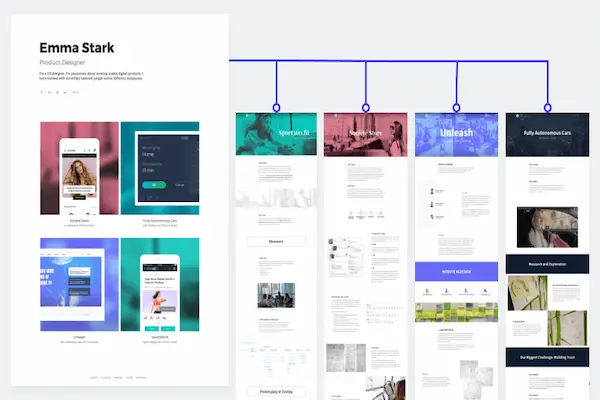
Project Portfolio vs Resume: How They Work Together
Your resume is a summary.
Your portfolio is the evidence behind the summary.
A resume line claims you can do something.
A portfolio case study proves it, step by step, with artifacts and outcomes.
For juniors, the portfolio often carries the credibility your job history cannot yet provide.
For students, it turns coursework into professional signals.
Use your resume to point to proof
A strong resume bullet references an outcome and links to a case study.
A strong case study then shows the process, deliverables, and measurable results.
This pairing makes you easier to trust because your claims are verifiable.
How to Build Project Portfolio Projects That Create Real Evidence
Not every project deserves a case study.
Choose projects that create artifacts a real person could use.
Choose projects that let you show tradeoffs, not just aesthetics.
Choose projects that include a clear before and after.
The “evidence ladder” for junior portfolios
If you lack formal experience, you can still collect strong evidence.
- Level one evidence is a polished deliverable that stands on its own.
- Level two evidence includes a rubric, checklist, or evaluation plan.
- Level three evidence includes feedback from real users or peers and documented revisions.
- Level four evidence includes measurable outcomes from a small pilot or realistic simulation.
You do not need level four on every project.
You do need at least level two on your best projects.
Examples of evidence for education portfolios
- A lesson plan with aligned objectives, activities, and assessment items.
- A rubric with clear criteria and examples of mastery.
- A microlearning module storyboard with interaction notes and accessibility considerations.
- A needs analysis summary with learner profile, constraints, and success criteria.
- A revised resource showing changes based on feedback and what improved.
If you can attach your evidence as downloadable files, do it.
If you cannot, include screenshots and a clear description of what the viewer is seeing.
Case Study Structure That Makes Your Work Easy to Trust
A case study is a professional story with receipts.
It should be skimmable in one minute and convincing in five minutes.
The structure below is designed for evidence-first storytelling.
The best-practice case study sections
- Title and one-line outcome.
- Your role and scope.
- Problem and audience.
- Constraints and success criteria.
- Process highlights.
- Key decisions and tradeoffs.
- Deliverables and artifacts.
- Results and evaluation.
- Reflection and next iteration.
If you follow this order, your reader never gets lost.
If your reader never gets lost, they stay long enough to be persuaded.
The one-page skim version for busy reviewers
Put a short “summary card” at the top of every case study.
- Audience: who this was for.
- Goal: what success meant.
- Deliverables: what you created.
- Tools: what you used.
- Result: what improved and how you know.
This lets someone evaluate fit before they commit time.
It also makes your work feel organized and professional.
How to Write Case Studies With Measurable Results
Measurable results do not require a giant dataset.
They require a clear definition of success and a reasonable way to evaluate it.
In education, “results” often means learning performance, clarity, or usability.
Your job is to avoid vague claims like “students loved it” without context.
Good metrics for education projects
- Alignment metrics, such as percentage of assessment items mapped to objectives.
- Clarity metrics, such as reduction in learner questions after rewriting instructions.
- Usability metrics, such as time to complete an activity or error rate in directions.
- Learning metrics, such as pre and post quiz score changes in a small pilot.
- Quality metrics, such as rubric interrater agreement in a peer review exercise.
You should only report what you actually measured.
You should also explain limitations so your credibility increases, not decreases.
How to show results when you do not have real learners yet
Many juniors cannot run a classroom pilot, and that is normal.
You can still be evidence-driven with realistic evaluation methods.
- Use expert review by asking a teacher, tutor, or peer to score with your rubric.
- Use think-aloud testing with one or two people to catch confusion in instructions.
- Use a simulated dataset or sample learner responses to demonstrate grading and feedback.
- Use before-and-after comparisons that show specific improvements you made.
The key is transparency about what your “test” represents.
Transparency is a trust signal.
A simple “results sentence” template
Use this pattern to keep results specific and believable.
- After change, metric improved from baseline to new value in context.
If you do not have numbers, use observable outcomes with clear evidence.
Observable outcomes can include reduced errors, clearer alignment, or faster completion.
Storytelling That Feels Professional, Not Dramatic
Good storytelling is not exaggeration.
Good storytelling is clear cause and effect.
You show the problem, the constraints, your reasoning, and the outcome.
You make it easy for the reader to imagine you doing the same work on their team.
Use a simple narrative arc
- Situation: what was happening and who needed help.
- Task: what success looked like and what you were responsible for.
- Action: what you did and why you did it.
- Result: what changed and how you evaluated it.
This arc keeps your case studies grounded.
It also prevents “tool dumping,” where you list software instead of showing outcomes.
Show tradeoffs to signal maturity
Junior portfolios often look naive because they pretend everything was easy.
Real work is not easy.
Mature portfolios show what you prioritized and what you intentionally did not do.
- What you cut to meet the deadline.
- What you simplified to reduce learner cognitive load.
- What you changed after feedback and why it mattered.
Tradeoffs prove you can think, not just produce.
Presentation: Make Your Portfolio Easy to Scan and Remember
Presentation is not decoration.
Presentation is how you reduce friction for the reviewer.
Less friction means more time spent with your evidence.
Layout rules that improve retention
- Use consistent headings across every case study.
- Use short sections and avoid long walls of text.
- Lead with the summary card and the final deliverable.
- Use visuals only when they clarify, not when they distract.
- Include a clear link to artifacts and downloadable files.
Consistency makes your portfolio feel curated.
A curated portfolio feels more senior than an oversized one.
Accessibility basics that signal professionalism
Education work should model inclusive design.
Your portfolio is part of your professional brand, so make it accessible.
- Use readable font sizes and strong contrast.
- Use headings in order so screen readers can navigate.
- Add alt text to images that carry meaning.
- Avoid relying on color alone to communicate differences.
These choices also make your work easier for everyone to scan.
Writing Checklist for Evidence-First Case Studies
Use this checklist before you publish any case study.
It will keep your writing concise and your claims credible.
Clarity checklist
- The audience is described in one sentence that includes level and context.
- The goal is written in observable terms, not vague intentions.
- The deliverables are listed and easy to find.
- Key terms are explained for non-experts.
- The case study can be skimmed without losing the plot.
Evidence checklist
- Every major claim has an artifact, screenshot, or measurable indicator attached.
- Results are stated with a baseline, method, and limitation when relevant.
- Feedback is summarized as themes, not as random quotes without context.
- Revisions are documented so improvement is visible.
- Files are named clearly and links work.
Trust checklist
- You clearly state what you did personally and what was done by others.
- You do not imply endorsements or affiliations you do not have.
- You describe constraints and tradeoffs honestly.
- You avoid inflated claims like “guaranteed impact” or “proven to work” without evidence.
Example Case Study Outlines for Education Portfolios
If you are not sure what to build, start with proven education artifact types.
These outlines are designed to create strong evidence quickly.
Outline 1: Lesson redesign with measurable clarity improvements
- Title: Redesigned a lesson for clearer instructions and stronger alignment.
- Audience: grade level or learner profile and context.
- Problem: where learners got stuck and what the original lesson lacked.
- Success criteria: what “clear and aligned” means in observable terms.
- Process: how you analyzed the lesson and identified friction points.
- Deliverables: revised lesson plan, materials, exit ticket, and rubric.
- Evaluation: think-aloud test results and what changed after feedback.
- Reflection: what you would improve next and what you learned about instruction design.
Outline 2: Microlearning module with a mini assessment plan
- Title: Built a microlearning sequence for a single skill with spaced practice.
- Audience: who the learners are and what constraints they face.
- Goal: the exact performance learners should demonstrate.
- Structure: three micro lessons plus practice and a mastery check.
- Deliverables: storyboard, scripts, interaction notes, and assessment items.
- Quality criteria: accessibility checks and cognitive load choices.
- Evaluation: rubric scoring and a plan for iterating after pilot data.
- Reflection: what you simplified, what you kept, and why.
Outline 3: Needs analysis and learning path proposal
- Title: Created a needs analysis and learning path for a specific audience.
- Context: what problem the organization or learners face.
- Audience: learner personas and current skill levels.
- Constraints: time, tools, delivery format, and stakeholder priorities.
- Success criteria: performance outcomes and how they will be measured.
- Deliverables: analysis summary, proposed path, and evaluation plan.
- Tradeoffs: what you prioritized and what you deferred.
- Reflection: risks, assumptions, and how you would validate next.
Templates You Can Copy for Any Project Portfolio Case Study
Templates reduce decision fatigue.
They also create consistency, which makes your portfolio feel more professional.
Template 1: Case study summary card
- Audience: ______________________________________.
- Goal: __________________________________________.
- My role: ________________________________________.
- Deliverables: _________________________________.
- Success criteria: _____________________________.
- Result: ________________________________________.
Template 2: Success criteria and evidence table
- Criteria: What “good” means in observable terms.
- Baseline: What existed before, or the starting assumption.
- Evidence: The artifact, metric, or evaluation method.
- Result: What changed and how you know.
- Limitations: What this result does not prove yet.
Template 3: Process highlights that avoid fluff
- I started by analyzing _______________________________.
- I identified the highest-risk confusion points, including __________________.
- I prioritized changes that improved ____________________________.
- I tested the revision by ________________________________.
- I iterated by changing ______________________ because __________________.
Template 4: Reflection prompts that sound mature
- The most important decision I made was ____________________________.
- The tradeoff I accepted was ______________________ in order to __________________.
- If I had one more week, I would improve ____________________________.
- The feedback surprised me because _________________________________.
- The reusable principle I learned is ________________________________.
Review Checklist: Publish Only Your Strongest Evidence
A portfolio improves when you remove weak items.
It also improves when each case study is easy to skim and hard to doubt.
Final review checklist
- The case study opens with an outcome and a clear audience.
- The deliverables are visible above the fold or within one scroll.
- Artifacts are included as links, files, or clear screenshots.
- Results are stated with an evaluation method, not just a feeling.
- Tradeoffs and constraints are stated without excuses.
- Writing is concise and avoids long paragraphs.
- Formatting is consistent across projects.
- Spelling and filenames look professional.
Common mistakes that quietly weaken junior portfolios
One mistake is listing tools instead of outcomes.
Another mistake is burying the final deliverable under paragraphs of context.
A third mistake is claiming impact without explaining measurement.
A fourth mistake is publishing too many projects and forcing the reader to choose.
Your goal is not to show everything you have done.
Your goal is to show the best evidence of what you can do next.
How to Build Project Portfolio Pages That Recruiters Can Navigate
Navigation is part of presentation.
Make it easy for someone to find the right project for the role.
A simple portfolio structure that works
- Homepage with your role direction and your top three projects.
- Projects page with filters like lesson design, assessment, and learning research.
- Each project page using the same case study sections and the same summary card.
- An about page that states what you want and what you are building toward.
- A contact option that is straightforward and professional.
If you make the path obvious, reviewers will follow it.
If you make the path confusing, they will bounce.
How to Reference Your Portfolio on Resume and LinkedIn
Your portfolio should be one click away from your resume and LinkedIn.
It should also be referenced in a way that signals outcomes.
Resume line templates
- Built __________ for __________, improving __________ as measured by __________.
- Designed __________ and evaluated it using __________, resulting in __________.
- Redesigned __________ to improve __________, supported by __________ evidence.
LinkedIn “Featured” strategy for juniors
Feature your best one to three case studies, not every certificate or minor assignment.
Lead with the artifact and a one-sentence outcome.
Then link to the full case study for deeper context.
This approach turns scrolling into curiosity.
Curiosity turns into clicks.
Independent Content Notice
Notice: this content is independent and does not have affiliation, sponsorship, or control by the entities mentioned.
Any platforms, institutions, tools, or third parties referenced are examples only, and you are responsible for your choices and usage.
Your Next Step: Build One Case Study This Week
Pick one project you already have, even if it feels imperfect.
Add a summary card, attach artifacts, define success criteria, and write a results section honestly.
Then apply the checklist and publish a version one.
A portfolio becomes powerful when you ship, revise, and stack proof over time.