
How much to study daily. Choose a daily study target with realistic time ranges, routines, and a gradual ramp-up plan for consistency.
This guide shows how much to study daily without overdoing it, with practical time ranges, sample routines, and a gradual ramp-up plan that protects consistency and burnout prevention.
How much to study daily: the realistic answer is “it depends,” but not in a vague way
The right daily study time depends on your goal, your deadline, your starting level, and your capacity, because learning is a cognitive task and not just a calendar task.
Busy professionals need a study routine that survives work cycles, family responsibilities, and low-energy days, because a plan that requires perfect weeks will collapse quickly.
Consistency matters more than intensity, because two weeks of intense studying followed by quitting produces less progress than small daily practice that continues for months.
Burnout prevention starts with choosing a target you can repeat, because repeatability is the real engine of skill growth.
- If you feel anxious about “not doing enough,” you are more likely to over-plan, because over-planning feels like control.
- If you feel tired and behind, you are more likely to binge study, because binge studying feels like catching up.
- If you want stable progress, you need a minimum viable daily version, because busy days are guaranteed.
- If you want long-term consistency, you need a weekly rhythm, because daily life is variable but weeks have patterns.
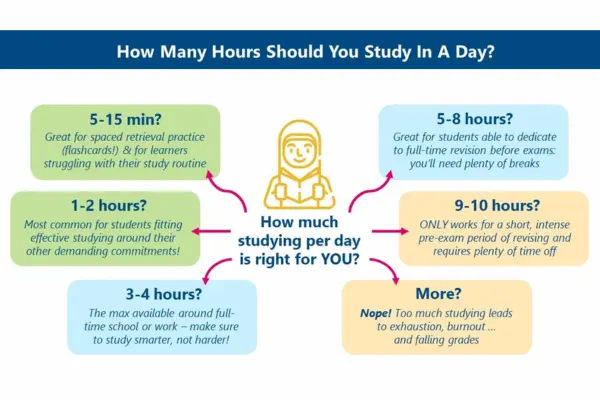
Time ranges: how much to study daily for most busy professionals
These ranges are designed for real life, because most professionals can’t sustainably add hours of daily study on top of a full workload.
Use the smallest range that still creates forward motion, because finishing and repeating beats overcommitting and restarting.
10–20 minutes per day: minimum viable consistency
This range works when you are overloaded, low-energy, or rebuilding a habit, because it keeps your streak alive without demanding willpower.
- Best for: habit building, vocabulary, fundamentals, short drills, flashcards, and recap summaries.
- Risk: progress feels slow if you never add project time, because some skills require longer focused practice occasionally.
- How to make it work: add one longer weekly session for applied practice, because application is what converts knowledge into skill.
30–45 minutes per day: sustainable skill growth
This range works for many busy learners, because it is long enough for practice and short enough to fit into weekdays.
- Best for: structured courses, problem sets, writing practice, tool practice, and small project steps.
- Sweet spot structure: 10 minutes learn, 25 minutes practice, 5 minutes review, because practice is the core.
- Burnout prevention: keep one rest day, because recovery supports retention and reduces avoidance.
60–90 minutes per day: accelerated learning with higher burnout risk
This range works when you have a near deadline and stable capacity, because it allows deeper work and larger project steps.
- Best for: exam preparation, portfolio building, and career switch timelines with strong commitment.
- Risk: fatigue and dropout if your work week becomes unpredictable, because sustained long sessions can become fragile.
- How to make it safer: split into two sessions, because two shorter blocks often beat one long block for busy schedules.
2+ hours per day: only for specific seasons, with guardrails
This range can work during sabbaticals or intensive transitions, yet it should be designed carefully, because overdoing it often reduces learning quality.
- Best for: full-time study periods, bootcamp-like plans, or short-term exam sprints with high recovery.
- Guardrail: track energy and retention, because long hours can produce diminishing returns and more mistakes.
- Guardrail: require output, because passive hours watched can create an illusion of progress without real competence.
How to choose your daily study target in 5 steps
Choosing your number becomes easier when you treat it like an engineering decision, because you are designing a routine you can sustain.
Start from feasibility and build upward, because sustainable effort compounds faster than ambitious effort that collapses.
- Set your weekly time budget first, because week-level planning is more realistic than day-level perfection.
- Choose your minimum viable daily study time, because minimums protect consistency during chaotic weeks.
- Choose your “standard day” study time, because standard days are where most progress happens.
- Choose one “deep work” session weekly, because many skills require uninterrupted practice to level up.
- Choose a weekly review moment, because reviewing keeps your plan aligned and prevents drifting into busywork.
Weekly time budget guide
- 2–3 hours per week: enough to build habit and fundamentals, because consistency matters most early.
- 4–6 hours per week: enough to progress steadily with practice and a small project, because you can integrate skills.
- 7–10 hours per week: enough for accelerated progress with careful burnout prevention, because you can do deeper projects.
Sample study routines you can copy
Sample routines reduce decision fatigue, because you can follow a structure instead of reinventing your plan daily.
Choose the routine that fits your life, because the best routine is the one you will actually do.
Routine A: 15 minutes per day + one weekly deep session
- Mon–Fri (15 minutes): 5 minutes recap, 8 minutes practice, 2 minutes note.
- Weekend (60 minutes): one project step and one review note.
- Best for: busy seasons and habit rebuilding, because it protects consistency.
Routine B: 35 minutes per day, five days a week
- 10 minutes: learn one concept or watch a short segment.
- 20 minutes: practice exercises or write a small deliverable.
- 5 minutes: active recall summary and next action list.
- Best for: steady skill building, because it balances input and output.
Routine C: 60 minutes per day, four days a week + one project block
- Mon/Wed/Fri/Sat (60 minutes): 15 minutes learn, 35 minutes practice, 10 minutes review.
- Sunday (90 minutes): project block and portfolio evidence capture.
- Best for: career switchers building proof, because it produces artifacts reliably.
Routine D: split sessions for low energy or chaotic schedules
- Morning (20 minutes): active recall and a short drill.
- Evening (20 minutes): one practice task and one note.
- Best for: inconsistent days, because splitting reduces resistance and improves follow-through.
Gradual ramp-up plan: increase study time without burning out
Ramp-up works because your brain and schedule adapt gradually, and gradual change is easier to sustain than sudden intensity.
The goal is to build a stable baseline first, then expand, because stability is what prevents restart cycles.
4-week ramp-up plan
- Week 1: 10–15 minutes per day, because the habit is the first win.
- Week 2: 20–25 minutes per day, because you add practice without overwhelming your schedule.
- Week 3: 30–40 minutes per day, because this is the sustainable growth zone for many professionals.
- Week 4: add one weekly deep session, because deeper practice creates visible progress and proof.
- If you miss two days, reduce the plan temporarily, because rebuilding consistency is more important than catching up aggressively.
- If you feel bored, add a project output, because applied work increases engagement and relevance.
- If you feel overwhelmed, reduce content intake and increase repetition, because repetition creates fluency and calm.
Burnout prevention: how to study daily without draining yourself
Burnout prevention is not optional if you want long-term progress, because exhausted learners retain less and quit more often.
Learning should feel effortful yet manageable, because constant dread is a sign your plan is too heavy or misdesigned.
Practical burnout prevention rules
- Stop sessions while you still have a little energy, because ending with capacity increases the chance you return tomorrow.
- Protect at least one rest day weekly, because recovery improves retention and reduces avoidance.
- Use the minimum viable day during busy weeks, because continuity beats perfection.
- Measure outputs, not hours, because hours can be passive while outputs show real skill transfer.
- Keep one “easy win” task available, because quick completion reduces friction on low-energy days.
Planning: daily target plus weekly structure is the safest approach
Daily targets work best when they sit inside a weekly plan, because weeks are easier to manage than perfect day-by-day execution.
A weekly structure also reduces guilt, because one missed day does not break the plan when the weekly total still holds.
Copy-ready planning template
DAILY STUDY TARGET PLANNER (COPY AND FILL)

My weekly study budget:
-

My minimum viable daily study time:
-

My standard daily study time:
-

My weekly deep work session:
- Day/time:
- Duration:

My weekly review moment:
- Day/time:
- Duration:

My proof/output for this week:
-
Common mistakes that make daily study targets collapse
Most failures are design problems, because plans often assume unlimited energy and predictable weeks.
Fixing the design usually fixes consistency, because busy professionals do not need more guilt and they need a better system.
- Setting a daily target that requires a perfect day, because real life rarely provides perfect days.
- Only watching content, because passive time creates weak retention and low confidence.
- Skipping review, because forgetting feels like failure when it is actually normal without spaced review.
- Trying to catch up with huge sessions, because catch-up binges often trigger burnout and quitting.
- Measuring only hours, because hours do not guarantee skill transfer without practice and outputs.
Decision-ready checklist: set your daily study target today
This checklist is short because your goal is to choose a number and start, because waiting for the perfect plan is its own form of procrastination.
- Pick your weekly time budget, because weekly planning is more realistic than daily perfection.
- Choose a minimum viable daily time (10–20 minutes), because minimums protect consistency.
- Choose a standard daily time (30–45 minutes if possible), because this range is sustainable for many busy professionals.
- Schedule one weekly deep work session, because deeper practice creates visible progress and proof.
- Add one weekly review, because review keeps your study routine aligned and adaptive.
- Define one weekly output, because output is what turns study time into confidence and credibility.
Final note and independence disclaimer
A good daily study target is the one you can repeat without dread, because consistency creates progression while overdoing it creates burnout and restart cycles.
Notice: This content is independent and has no affiliation, sponsorship, or control over any institutions, platforms, or third parties mentioned.