
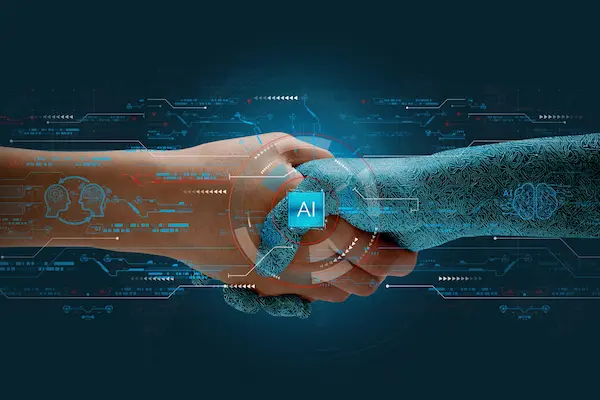
The rapid growth of artificial intelligence in recent years has created a mix of curiosity, excitement, and concern among professionals from many different fields, especially those who read headlines about automation, job losses, and machines replacing human work without always seeing clear explanations of what this really means in daily professional life.
For people who are worried about automation and its effect on their current role or future opportunities, the biggest challenge is often not the technology itself, but the uncertainty, because it is hard to prepare for something that feels abstract, unpredictable, and constantly changing.
This in-depth guide about the AI impact on careers was created to help you understand likely scenarios in a realistic and calm way, showing how artificial intelligence tends to change tasks more than entire professions, and how professionals can adapt proactively instead of reacting with fear or paralysis.
Throughout this article, you will find clear explanations of how AI usually enters the workplace, scenario-based examples of task changes, a practical task-mapping guide, an adaptation checklist, and concrete ideas for upskilling plans that focus on career resilience rather than chasing every new trend.
The objective is not to predict the future perfectly, but to help you make thoughtful decisions today, based on patterns that are already visible, so you can feel more prepared, relevant, and confident about your professional path.
Why the AI Impact on Careers Feels So Unsettling
Artificial intelligence often feels threatening because it is discussed in extreme terms, either as a miracle that will solve everything or as a force that will eliminate most jobs, leaving little room for nuanced understanding.
For professionals who depend on their skills to earn a living, this kind of messaging naturally creates anxiety, especially when it is not clear which parts of the work are actually at risk.
Common Sources of Anxiety About AI
- Unclear information about what AI can really do.
- Fear of being replaced by automation.
- Pressure to constantly learn new tools.
- Contradictory messages in the media.
Clarity reduces fear more effectively than optimism.
Understanding AI in the Workplace in Simple Terms
Artificial intelligence in the workplace usually refers to software systems that can analyze data, recognize patterns, generate content, or assist with decision-making, often by automating parts of tasks that were previously done manually.
In most cases, AI does not replace entire roles overnight, but instead changes how specific activities are performed.
What AI Commonly Does at Work
- Process large amounts of data quickly.
- Automate repetitive or rule-based tasks.
- Support analysis and recommendations.
- Generate drafts or suggestions.
Human judgment usually remains essential.
Automation Versus Augmentation: A Key Distinction
One of the most important concepts when discussing the AI impact on careers is the difference between automation, where tasks are done by machines, and augmentation, where AI supports humans to work more efficiently.
Most real-world applications fall somewhere in between.
Examples of Automation
- Automatically categorizing documents.
- Scheduling routine reports.
Examples of Augmentation
- Drafting content for human review.
- Highlighting insights for decision-makers.
Understanding this difference helps frame realistic expectations.
Why Tasks Change Faster Than Job Titles
Job titles tend to remain stable because organizations are built around roles, teams, and responsibilities, while tasks within those roles evolve more quickly as new tools are introduced.
This means that the AI impact on careers is often felt as a shift in daily activities rather than a sudden disappearance of entire professions.
What This Means in Practice
- Some tasks disappear.
- Some tasks become easier.
- New tasks appear.
Careers evolve through task changes.
Scenario-Based View: How AI Changes Different Types of Work
Looking at scenarios helps make abstract ideas more concrete, especially for professionals trying to imagine how their own role might change.
Scenario 1: Knowledge-Based Office Roles
In roles that involve analysis, writing, planning, or coordination, AI often automates initial drafts, summaries, or data processing, while humans focus more on interpretation, decision-making, and communication.
- Less time spent on first drafts.
- More time reviewing and refining.
Scenario 2: Operational and Administrative Roles
In operational roles, automation may handle routine processes, allowing workers to focus on exceptions, customer interaction, or process improvement.
- Fewer repetitive steps.
- More oversight and problem-solving.
Scenario 3: Creative and Strategic Roles
Creative professionals may use AI as a brainstorming or production aid, while still relying on human taste, context, and originality.
- Faster experimentation.
- Greater focus on direction and judgment.
Mapping Your Own Tasks: A Practical Starting Point
Instead of worrying about job titles, a more productive approach is to analyze your own role at the task level, which allows you to see where AI might affect you directly.
Task Mapping Guide
- List your regular tasks.
- Group tasks by type.
- Identify repetitive elements.
- Identify judgment-heavy elements.
This exercise creates clarity.
Common Task Categories
- Repetitive and rule-based.
- Analytical and interpretive.
- Creative and strategic.
- Interpersonal and communicative.
AI affects each category differently.
Which Tasks Are More Likely to Be Automated
Tasks that follow clear rules and involve structured data are generally more suitable for automation.
Higher Automation Likelihood
- Data entry and validation.
- Basic reporting.
- Simple content formatting.
Efficiency drives automation here.
Which Tasks Are More Likely to Stay Human-Centered
Tasks that require context, empathy, ethical judgment, or complex decision-making are harder to automate fully.
Lower Automation Likelihood
- Managing relationships.
- Leading teams.
- Making nuanced decisions.
Human skills remain valuable.
Understanding Skill Shifts Instead of Skill Loss
Rather than eliminating skills entirely, AI often shifts which skills are most valuable within a role.
Common Skill Shifts
- From manual execution to oversight.
- From data gathering to interpretation.
- From routine work to exception handling.
Skills evolve, they rarely vanish overnight.
Career Resilience: What It Really Means
Career resilience is the ability to adapt to changes, learn continuously, and reposition yourself as tasks and tools evolve, rather than relying on one static set of skills.
This mindset is increasingly important in an AI-influenced workplace.
Elements of Career Resilience
- Awareness of trends.
- Willingness to learn.
- Transferable skills.
Resilience is built gradually.
Adapting Proactively Without Overreacting
One common mistake is trying to learn everything about AI at once, which often leads to burnout and confusion.
A calmer approach focuses on relevance.
Principles for Calm Adaptation
- Focus on your role first.
- Learn tools that support your tasks.
- Avoid chasing hype.
Intentional learning beats random learning.
Upskilling Plan Ideas That Make Sense
An upskilling plan does not need to be complex or expensive to be effective.
Step 1: Identify Gaps
- Which tasks are changing?
- Which skills support new tasks?
Step 2: Choose Learning Focus Areas
- Analytical thinking.
- Communication and storytelling.
- Tool literacy.
Step 3: Apply Learning Gradually
- Practice on real tasks.
- Reflect on results.
Application reinforces learning.
Developing Skills That Complement AI
Skills that work well alongside AI tend to become more valuable.
Complementary Skill Areas
- Critical thinking.
- Ethical judgment.
- Communication.
- Problem framing.
These skills age well.
Understanding Future Tasks Instead of Future Jobs
Many discussions focus on future jobs, but future tasks are easier to observe and prepare for.
Examples of Emerging Task Patterns
- Reviewing AI-generated outputs.
- Defining rules for automation.
- Explaining decisions to stakeholders.
Tasks evolve incrementally.
How Organizations Typically Introduce AI
Most companies adopt AI gradually, starting with pilots and limited use cases.
Common Adoption Stages
- Experimentation.
- Task-level automation.
- Process integration.
This creates adjustment time.
What to Observe in Your Current Workplace
Watching how your organization uses AI offers valuable insight.
Signals to Observe
- Which tasks are automated first.
- How training is handled.
- Who is involved in decisions.
Observation informs strategy.
Adapting Internally Versus Changing Roles
Adaptation does not always mean changing jobs.
Internal Adaptation Options
- Volunteering for pilot projects.
- Learning new tools used by the team.
When External Change Might Make Sense
- If tasks shrink significantly.
- If growth opportunities disappear.
Context matters.
Creating a Personal AI Adaptation Checklist
Awareness
- I understand which tasks may change.
Skills
- I am improving at least one complementary skill.
Action
- I apply learning to real work.
This checklist keeps focus.
Common Myths About AI and Careers
Myth: AI Will Replace Most Professionals Soon
Change is usually gradual.
Myth: Only Technical Skills Matter Now
Human skills remain essential.
Myth: Learning AI Means Learning to Code
Understanding use cases is often enough.
Practice Exercise: Map One Week of Tasks
Exercise Steps
- List tasks from one workweek.
- Mark repetitive tasks.
- Mark judgment-based tasks.
- Reflect on where AI could assist.
This builds awareness.
Frequently Asked Questions About AI Impact on Careers
Should I be worried about automation?
Concern is natural, panic is not helpful.
Is upskilling always necessary?
Learning supports resilience.
Can one person keep up with AI changes?
Yes, with focused effort.
Final Thoughts and a Calm Next Step
Understanding the AI impact on careers does not require predicting the future or mastering every new tool, but rather developing awareness of how tasks evolve, how skills shift, and how humans and technology increasingly work together.
When you map your tasks, focus on complementary skills, and adopt a calm, proactive approach to learning, you increase your career resilience and reduce the anxiety that often comes from uncertainty.
Could you take one small step this week, such as mapping your main tasks or choosing one skill to strengthen, knowing that thoughtful preparation is one of the most reliable ways to adapt to change?