
Changing fields can feel like stepping off a solid path into fog, especially when you have responsibilities and cannot afford an impulsive mistake.
This career transition roadmap gives you a structured, realistic action plan with stages, low-risk experiments, portfolio proof, networking rhythms, and clear progress indicators.
Career transition roadmap: what “safe” really means in a career pivot
Safety in a career pivot does not mean zero fear, because any meaningful change involves uncertainty and learning.
Real safety comes from designing reversible steps, because reversible steps let you collect evidence before you commit to a higher-risk move.
A strong career transition roadmap treats your pivot like a project, because projects have phases, milestones, resources, risks, and progress metrics.
Risk drops when you stop guessing and start testing, because testing turns “maybe” into measurable signals you can act on.
Confidence grows when your plan includes proof, because proof replaces self-doubt with tangible outcomes you can point to.
Stability improves when you protect runway, because runway gives you time to make strategic decisions instead of desperate ones.
- Safer transitions prioritize learning before quitting, because you can validate fit while keeping income and structure.
- Smarter pivots focus on adjacency, because adjacent moves require fewer new skills and offer faster credibility.
- Better action plans include constraints, because a plan that ignores your real life tends to collapse under pressure.
- Healthy roadmaps include recovery and pacing, because burnout can turn a well-designed pivot into a rushed escape.
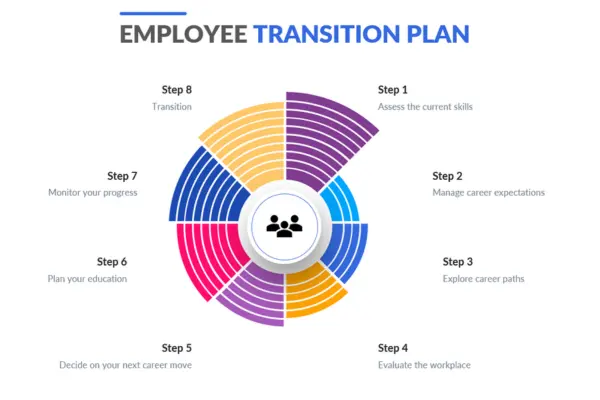
Why impulsive career transitions happen, and how this roadmap prevents them
Impulsive moves often happen after a slow buildup of misalignment, because frustration accumulates until one bad week becomes the final trigger.
Urgency can feel like clarity, yet urgency is frequently emotional overload that hides the real decision criteria you need.
Many professionals quit because they want relief, while what they actually need is a better system for choosing the next role.
Relief matters, although relief alone can lead to repeating patterns in a new environment.
Structured planning creates distance from the emotional spike, because structure gives you a calm process when your feelings are loud.
One good roadmap replaces “escape planning” with “transition design,” which is a mindset shift that reduces regret.
- Stabilize first, because a regulated nervous system makes better decisions than a stressed one.
- Explore with experiments, because experiments create data without forcing irreversible commitments.
- Build proof intentionally, because proof turns curiosity into credible capability.
- Position your story, because the market responds to clarity more than it responds to internal struggle.
- Launch your search strategically, because targeted effort reduces rejection fatigue and protects confidence.
The 7-stage career transition roadmap you can follow without drama
Stages make your career transition feel manageable, because each stage has a clear purpose and a clear output.
Progress becomes visible when you treat the roadmap like a sequence, because you stop trying to solve everything at once.
Each stage below includes low-risk experiments and progress indicators, so you can move forward without relying on blind faith.
Stage 0: Stabilize your foundation before you pivot
Stability is not optional, because changing careers while depleted often creates impulsive decisions and inconsistent execution.
Energy is a resource in this process, because learning, networking, and proof-building require steady attention over time.
Financial runway is also a resource, because runway gives you negotiating power and reduces panic-driven choices.
- Clarify your constraints, because a safe action plan must fit your schedule, health, and responsibilities.
- Estimate your runway, because knowing your baseline reduces background anxiety and improves decision making.
- Protect recovery time, because consistent sleep and rest make learning faster and communication clearer.
- Choose a weekly pivot rhythm, because small consistent actions beat intense bursts that collapse.
- Stability indicator: you can plan one week ahead without dread taking over your thinking.
- Runway indicator: you can explain your financial boundaries in one sentence without shame or avoidance.
- Capacity indicator: you can commit to two to four weekly hours for transition work without harming health.
- Clarity indicator: you can describe what you want to move away from without spiraling into resentment.
Stage 1: Define your pivot target using role themes, not fantasy titles
Titles are unreliable, because the same title can mean completely different work across companies.
Role themes are safer than specific job labels, because themes focus on the kind of work you want to do repeatedly.
Choosing a theme reduces overwhelm, because it narrows your search to a manageable set of skills and outputs.
- Pick one primary role theme, because focus makes your portfolio and networking sharper.
- Select one secondary theme, because a backup option reduces fear and keeps you flexible.
- Define your non-negotiables, because misaligned environments can ruin even a good career pivot.
- Write a “direction sentence,” because a single clear sentence becomes your anchor in conversations and decisions.
- Direction sentence example: “I’m pivoting toward operations and process improvement roles where I can simplify workflows and measure efficiency gains.”
- Direction sentence example: “I’m transitioning into analytics-focused work where I can answer business questions with data and communicate decisions clearly.”
- Direction sentence example: “I’m moving into enablement and training work where I can build playbooks, coach teams, and improve performance through clarity.”
Decision quality improves when you define what success looks like in daily tasks, because daily tasks determine whether your new path feels sustainable.
Stage 2: Map transferable skills so you do not “start over”
Transferable skills reduce risk, because they prove you already create value in ways that carry across industries and roles.
A skills map also prevents impostor syndrome from running the project, because you can point to evidence instead of debating your worth.
Clustering helps you communicate your strengths, because a few competency themes are easier to remember than a long list of scattered tasks.
- Inventory your repeated responsibilities, because repetition reveals stable capability.
- List measurable outcomes, because outcomes translate better than internal job-specific language.
- Capture feedback themes, because repeated praise often reveals your strongest core competencies.
- Build a short evidence matrix, because every skill should have at least one proof story attached.
- Transferable skill example: stakeholder management, because aligning people with competing priorities exists in nearly every role.
- Transferable skill example: process improvement, because making work repeatable and reducing friction matters across industries.
- Transferable skill example: analytical thinking, because diagnosing root causes and recommending actions is universally valued.
- Transferable skill example: clear communication, because decisions move faster when people understand scope, trade-offs, and next steps.
Progress indicator: you can explain three transferable strengths with one specific example each, without using vague buzzwords.
Stage 3: Run low-risk experiments to validate career fit
Experiments create reality, because you cannot fully predict fit by reading job descriptions or watching videos.
Small tests are safer than big commitments, because they cost less time and emotional energy if you discover poor fit.
Experiments work best when they produce outputs, because outputs simulate the real work and create early proof.
- Choose one experiment that matches the target role’s typical output, because outputs reflect day-to-day reality.
- Time-box the experiment to one to three weeks, because short cycles reduce avoidance and increase learning speed.
- Share the output for feedback, because outside perspective helps you separate “new and hard” from “wrong and draining.”
- Record energy and satisfaction notes, because your internal response is part of the career fit data.
- Operations experiment: map a workflow, remove a bottleneck, and document the new standard process with a simple checklist.
- Analytics experiment: answer one real business question with data, then write a one-page recommendation memo with trade-offs.
- Product-adjacent experiment: write a problem statement, propose solutions, and outline risks and success metrics for a small feature idea.
- Enablement experiment: create a training guide, run a short session, and track whether learners can apply the concept afterward.
- Marketing experiment: draft a positioning brief, a message map, and a test plan for a small campaign concept.
Progress indicator: you have completed at least one experiment and produced a tangible artifact you can discuss confidently.
Stage 4: Build a portfolio that lowers perceived risk for hiring teams
A portfolio is not only for creative fields, because many roles can be represented through documents, analyses, plans, and before-and-after improvements.
Proof matters more than potential during a pivot, because hiring teams want evidence that you can do the work in their context.
Portfolios reduce interview pressure, because you can show your thinking instead of trying to prove everything through quick answers.
- Choose three portfolio pieces, because three is enough to show range without overwhelming you.
- Make each piece outcome-focused, because outcomes communicate value faster than process alone.
- Use a consistent format, because consistency makes your work easier to scan and remember.
- Write a short reflection for each piece, because reflection reveals judgment and learning, which are senior signals.
- Portfolio piece format: problem, context, constraints, approach, output, result, lessons, and what you would do next.
- Portfolio piece warning: avoid confidential information, because responsible handling of data and context builds trust.
- Portfolio piece improvement: include before-and-after comparisons, because comparisons make impact obvious.
- Portfolio piece clarity: add decision points and trade-offs, because trade-offs show real-world thinking.
Progress indicator: you can present one portfolio piece in five minutes with clear structure and measurable impact language.
Stage 5: Build a networking system that feels professional, not performative
Networking is safer when it is treated as research and relationship-building, because that reduces the pressure to “sell yourself” before you feel ready.
Consistency beats intensity here, because small weekly conversations compound into opportunities and insight.
Helpful networking is mutual, because people respond better when the interaction respects their time and offers clear context.
- Identify your “target circles,” because focused outreach produces better conversations than random messaging.
- Write a simple introduction, because clarity increases response rates and reduces awkwardness.
- Ask practical questions about daily work, because daily work determines career fit and required skills.
- Follow up with gratitude and a short summary, because closing the loop builds trust and keeps relationships warm.
- Target circle example: professionals doing your target role in your current industry, because domain familiarity reduces barriers.
- Target circle example: hiring managers or team leads in adjacent roles, because they can clarify what “good” looks like in practice.
- Target circle example: peers who recently pivoted, because recent pivots reveal realistic timelines and common obstacles.
- Target circle example: communities inside your company, because internal moves often provide the safest career transition path.
Progress indicator: you have a weekly rhythm that includes at least one career conversation or relationship touchpoint.
Stage 6: Launch the search with an action plan that protects your confidence
Job searching during a pivot can feel personal, yet it is largely a matching process that improves with iteration and feedback.
Targeted applications reduce rejection fatigue, because better alignment produces more meaningful conversations and better learning loops.
Story clarity is your leverage, because pivot candidates win when they translate past experience into the new role’s outcomes.
- Rewrite your resume to match role outputs, because output language signals readiness more than title matching does.
- Create a short pivot narrative, because interviewers need a simple reason that makes your transition feel logical.
- Apply in batches, because batches create feedback cycles without draining your energy daily.
- Track results and adjust, because a pivot improves through small refinements rather than one perfect attempt.
- Application quality indicator: each application includes a clear match between your evidence and the role’s top requirements.
- Conversation indicator: you are getting more screens or callbacks over time, even if the first batch was quiet.
- Story indicator: your narrative sounds simpler after repetition, because clarity increases as you practice.
- Energy indicator: your plan feels sustainable across weeks, because sustainability matters more than one frantic month.
Stage 7: Land well and de-risk the first 90 days in the new field
Transition success is not only getting the offer, because early performance and integration determine whether your pivot becomes stable and satisfying.
Onboarding is a leverage window, because early clarity and alignment can accelerate trust faster than later corrections.
Small wins matter more than big speeches, because trust is usually built through consistent delivery and clear communication.
- Define success metrics with your manager early, because ambiguity creates anxiety and misalignment.
- Build a stakeholder map, because knowing who matters and what they care about speeds up your influence.
- Ship a small win within the first month, because early outcomes create credibility during a career pivot.
- Document learnings and decisions, because your notes become assets for future clarity and performance.
- Ask for feedback on a specific behavior, because targeted feedback improves faster than vague check-ins.
- First 30 days indicator: you understand expectations, key relationships, and the core workflow without constant confusion.
- First 60 days indicator: you can independently deliver a standard output with acceptable quality.
- First 90 days indicator: you can propose improvements or take ownership of a small initiative confidently.
The career transition timeline: a realistic pacing guide
Timelines help you stay grounded, because pivots often take longer than you want yet less time than your fear predicts when you work consistently.
Reality varies by industry and role, so treat this as a pacing guide rather than a promise.
Consistency is the primary engine, because weekly progress compounds faster than occasional bursts of effort.
Weeks 1–2: stabilize, define, and choose a focus
- Write your constraints and non-negotiables, because they shape what “safe” looks like for your career transition.
- Choose one primary role theme, because focus reduces overwhelm and helps you build coherent proof.
- Start a transferable skills inventory, because naming strengths reduces the fear of starting over.
- Schedule two weekly time blocks, because calendar time is what turns intention into execution.
Weeks 3–6: experiments and early proof
- Complete one low-risk experiment, because real work experience beats speculation about fit.
- Draft one portfolio piece from that experiment, because documentation turns effort into proof.
- Have two career conversations, because insider perspective reveals what the role truly requires.
- Refine your pivot narrative, because clear language becomes easier after you collect real evidence.
Weeks 7–12: portfolio, positioning, and targeted outreach
- Build two additional portfolio pieces, because a set of three creates a credible story of capability.
- Translate your resume into outcome language, because outcome language signals relevance during a pivot.
- Start a weekly networking rhythm, because relationships compound and often uncover hidden opportunities.
- Apply in small batches, because batches create feedback loops without overwhelming you emotionally.
Months 4–6: deepen skills, widen proof, and increase search intensity
- Choose one high-impact skill gap and focus on it, because depth creates confidence and stronger interview performance.
- Increase proof difficulty gradually, because seniority is often demonstrated through scope and complexity.
- Improve interview stories using feedback, because pivot interviews reward learning and clarity.
- Adjust the plan using metrics, because a roadmap is a living system and not a fixed script.
Low-risk experiments: a menu you can choose from
Experiments reduce fear by making progress measurable, because you can learn and adapt without gambling your stability.
Choosing the right experiment depends on your target role’s typical outputs, because outputs are the cleanest proxy for daily work.
Scope should stay small at first, because finishing is more valuable than starting big and stalling.
Experiment types by risk level
- Very low risk: shadowing, internal collaboration, and small contributions, because you can test interest with minimal time investment.
- Low risk: micro-projects with a clear deliverable, because you learn by doing without needing permission from a hiring team.
- Moderate risk: taking on a stretch responsibility at work, because it builds real experience yet requires alignment with your workload.
- Higher risk: short-term contract work, because it can accelerate proof while adding income variability and uncertainty.
Experiment ideas you can finish in two weeks
- Write a one-page decision memo, because crisp recommendations are valuable across strategy, product, operations, and leadership roles.
- Standardize a recurring workflow, because operational clarity produces measurable time savings and fewer errors.
- Create a simple tracking dashboard, because measurement is a universal lever in performance-driven environments.
- Build a short training guide, because teaching reveals clarity and strengthens communication as a transferable skill.
- Facilitate one alignment meeting with a clear agenda, because stakeholder management is a portable seniority signal.
- Finish indicator: a completed artifact exists that you can share or summarize in a conversation.
- Fit indicator: energy stayed stable enough that you did not dread the work, even when details were annoying.
- Learning indicator: you can name two skills you strengthened and one skill you should develop next.
- Value indicator: someone benefited from your output, even if the benefit was clarity rather than a big metric change.
Portfolio guidance: what to include when you are not in a “portfolio” field
Portfolios work for career changers because they show thinking, process, and outcomes, which reduces the need for “perfect” prior titles.
Hiring teams trust what they can see, because visible proof makes you feel less risky than someone who only claims interest.
Strong portfolios tell a story, because storytelling connects your skills to real impact and makes your pivot feel logical.
Three portfolio categories that fit most pivots
- Problem-solving artifact: a memo, analysis, or recommendation, because it demonstrates judgment and structured thinking.
- Execution artifact: a plan, workflow, or program outline, because it demonstrates delivery skills and operational discipline.
- Communication artifact: a guide, presentation, or training, because clarity is a core competency across roles.
Portfolio checklist for each piece
- State the problem simply, because clear problem definition is a high-leverage professional skill.
- Add context and constraints, because realism makes your decisions credible.
- Show your approach and trade-offs, because mature work acknowledges limitations and makes choices explicit.
- Present an output that a role would recognize, because recognizable outputs make you feel job-ready.
- Include a measurable result when possible, because even small metrics can strengthen your narrative.
- Reflect on what you learned, because learning agility is a key pivot advantage.
- Clarity signal: someone can understand your artifact in three minutes without needing extra explanation.
- Relevance signal: the artifact matches the target role’s typical work product.
- Credibility signal: constraints and trade-offs are stated, which shows honest, real-world thinking.
- Confidence signal: you can explain what you did and why you did it without apologizing for being new.
Networking for a career transition: a simple system that does not feel salesy
Networking becomes less intimidating when you focus on learning, because learning creates natural questions and reduces self-consciousness.
Professional relationships are built through consistency, because one conversation rarely changes everything while repeated touchpoints often do.
Good networking creates mutual benefit, because people respond better when you respect their time and create clarity.
Your weekly networking action plan
- Reach out to one person each week, because consistent outreach compounds without overwhelming you.
- Ask for a short conversation about role reality, because reality reduces fantasy and improves career fit choices.
- Request feedback on a portfolio artifact when appropriate, because feedback accelerates learning and creates deeper engagement.
- Send a concise follow-up summary, because summaries show professionalism and make the interaction memorable.
- Keep a simple tracker, because tracking prevents relationships from fading unintentionally.
- Conversation success metric: you learned one concrete truth about the role’s daily work.
- Conversation success metric: you discovered one skill that matters more than job descriptions suggest.
- Conversation success metric: you received one suggestion for a next experiment or proof-building step.
- Conversation success metric: you strengthened a relationship through gratitude and clarity.
Progress indicators: how to know your career transition is working
Indicators keep you grounded, because career transitions can feel slow even while you are making meaningful progress.
Leading indicators show effort quality, while lagging indicators show market response, and both matter for a realistic roadmap.
Tracking reduces emotional whiplash, because you can evaluate progress using evidence rather than mood.
Leading indicators you can control
- Weekly hours invested consistently, because consistency predicts outcomes more reliably than intensity.
- Completed experiments with artifacts, because finished outputs are proof and proof is leverage.
- Portfolio pieces completed, because portfolios reduce perceived risk during a pivot.
- Career conversations completed, because conversations reveal role reality and open doors over time.
- Resume and narrative iterations, because translation into role language often unlocks interviews.
Lagging indicators that reflect external response
- Interview screens and callbacks, because these show that your positioning is landing with the market.
- Interview progression rate, because moving beyond early rounds suggests your proof and stories are credible.
- Referrals and warm introductions, because these reflect growing trust in your pivot direction.
- Offer quality and fit, because fit signals that you targeted the right roles rather than spraying applications widely.
A simple weekly scorecard template
WEEKLY CAREER TRANSITION SCORECARD

1) Hours invested:
- Planned:
- Actual:

2) Proof built:
- Artifact shipped:
- What it demonstrates:

3) Networking:
- Conversations:
- One insight learned:

4) Positioning:
- Resume change made:
- Story practiced:

5) Market signals:
- Applications sent:
- Screens:
- Interviews:
- Notes on what worked:

6) Next week focus:
- One experiment:
- One portfolio step:
- One conversation:
Common mistakes that make career pivots riskier than they need to be
Mistakes are normal, yet certain patterns reliably increase risk, especially for professionals who are tired and want change fast.
Awareness helps because you can redesign the plan, since the goal is a safer transition and not a heroic struggle.
- Quitting before testing fit, because you lose stability before you gain evidence.
- Learning without producing proof, because courses and notes do not automatically translate into hiring confidence.
- Applying without a target theme, because scattered applications create scattered feedback and weaker narratives.
- Overestimating tool gaps, because tools can be learned while judgment and communication often transfer strongly.
- Ignoring constraints, because unsustainable plans collapse and create regret.
- Assuming networking is optional, because relationships often unlock the clearest role reality and the best opportunities.
- Replace urgency with a 90-day experiment mindset, because experiments create clarity without trapping you.
- Turn learning into artifacts weekly, because artifacts create proof and proof reduces risk.
- Focus on adjacency first, because adjacent pivots tend to be faster and less emotionally expensive.
- Track progress indicators, because tracking protects your confidence during quiet weeks.
Decision matrix: choose between pivot paths objectively
Decision matrices help when multiple paths look viable, because they translate fuzzy feelings into comparable scores and trade-offs.
Objectivity does not remove intuition, yet it prevents intuition from being hijacked by fear or excitement.
Use this matrix to compare two or three pivot directions, because comparison clarifies what you truly prioritize.
Pivot decision criteria you can score
- Transferability of your current skills, because high transferability lowers the learning burden.
- Evidence potential in 60 days, because fast proof reduces perceived risk quickly.
- Market demand in your location or remote options, because demand influences timeline and choice flexibility.
- Learning curve fit, because realistic ramp time matters for a safe career transition.
- Enjoyment under pressure, because every role has stress and you need a stress profile you can sustain.
- Lifestyle fit, because misfit schedules and energy drains can sabotage long-term success.
- Optionality for future growth, because the best pivots become platforms rather than dead ends.
Decision matrix template
| Criteria | Weight (1–3) | Pivot A Score (1–5) | Pivot A Weighted | Pivot B Score (1–5) | Pivot B Weighted | Pivot C Score (1–5) | Pivot C Weighted |
|---|---|---|---|---|---|---|---|
| Transferable skills fit | 3 | ||||||
| Evidence potential | 3 | ||||||
| Market demand | 2 | ||||||
| Learning curve fit | 2 | ||||||
| Enjoyment under pressure | 2 | ||||||
| Lifestyle fit | 3 | ||||||
| Optionality | 1 | ||||||
| Total |
Interpretation becomes easier when you write a short trade-off summary, because trade-offs reveal what you are willing to sacrifice and what you must protect.
Next actions: your safer career transition roadmap checklist
Checklists reduce mental load, because you can follow a sequence even when you feel uncertain.
Use this list as a practical action plan, because the goal is steady forward movement and not perfection.
Start here: the first seven days
- Write your constraints and runway boundaries, because safety depends on respecting real life.
- Choose one primary role theme, because focus reduces scattered effort.
- Draft your direction sentence, because clarity makes conversations easier.
- List ten transferable skills with examples, because evidence reduces the fear of starting over.
- Schedule two weekly time blocks, because unscheduled goals usually disappear.
Build momentum: the next 30 days
- Complete one low-risk experiment, because action creates data you cannot think your way into.
- Create one portfolio artifact, because proof makes your pivot credible.
- Have two career conversations, because insiders reveal daily reality and hidden requirements.
- Update your resume language toward outcomes, because outcomes translate across roles.
- Track leading indicators weekly, because tracking keeps you steady during quiet weeks.
Increase credibility: the next 60 to 90 days
- Build two more portfolio pieces, because three examples create a strong narrative arc.
- Practice your pivot story weekly, because repetition makes you calm and concise.
- Apply in targeted batches, because targeted batches produce cleaner feedback loops.
- Ask for feedback and adjust, because pivots improve through iteration.
- Choose one skill gap and close it with proof, because “learned” becomes believable when it becomes “delivered.”
Final note and independence disclaimer
A safer career transition is built through structured steps, consistent experiments, and honest progress indicators, rather than through big emotional leaps.
Momentum becomes sustainable when your roadmap protects stability while building proof, because proof is what transforms a career pivot into a credible next chapter.
Notice: This content is independent and has no affiliation, sponsorship, or control over any institutions, platforms, or third parties mentioned.