
You can take ten MOOCs and still feel stuck if they do not connect to a real goal.
You can take three well-chosen MOOCs, document outcomes, and look like a focused professional in a new field.
How to Use MOOCs to Build a Coherent Learning Path
MOOCs are most powerful when you treat them like building blocks, not entertainment.
Your goal is not “watching lectures.”
Your goal is a clear skill story that leads to a role, a project, or a promotion.
A coherent learning path is simply a sequence where each course prepares you for the next outcome.
That outcome could be a portfolio project, a credential, a work deliverable, or a confident career pivot.
When you plan the sequence first, you stop wasting time on random topics.
When you plan the sequence first, you also reduce decision fatigue and finish more often.
Who this guide is for
This is for professionals exploring new fields affordably without enrolling in a full degree right away.
This is for self-paced learners who want structure, completion, and proof of skills.
This is for anyone who wants to stack credentials intelligently and show them credibly on a resume or LinkedIn.
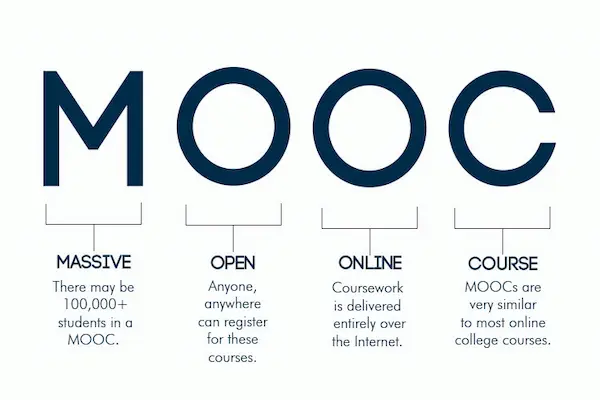
Why MOOCs Work So Well for Career Exploration
MOOCs let you test a field before you commit serious time or money.
They also let you learn from universities, companies, and experienced instructors without relocating.
You can move fast, you can go deep, and you can choose the level that matches your current skill.
Most importantly, MOOCs are modular, which makes them ideal for building a learning path.
That modularity supports credential stacking, where smaller achievements add up to a larger signal.
But the same modularity can also create chaos if you collect courses without a plan.
The difference is a goal-based selection process and a completion system.
What a MOOC can do, and what it cannot do
A good MOOC can teach frameworks, vocabulary, workflows, and common tools.
A good MOOC can give you structured practice through quizzes, labs, and assignments.
A good MOOC can also provide a certificate that supports your credibility.
A MOOC cannot guarantee employment, and it cannot replace real-world experience by itself.
That is why your learning path must include outcomes you can show, not just badges you can list.
Start With the End: Define Your Target Role and Skill Story
If you do not decide what you are becoming, you will keep studying forever.
Start by writing a simple target statement that you can refine later.
Think of it as a working hypothesis for your career experiment.
Write a one-sentence target statement
- I am moving toward a role in ________ by building skills in ________ and proving them through ________.
This sentence forces clarity without requiring perfection.
You can adjust it after your first project or your first course.
Turn the role into a skill map
Next, list the skills the role demands, and separate them into three layers.
- Foundations are concepts and vocabulary you must understand to learn anything else.
- Core skills are the tasks you must perform to be useful in the role.
- Signals are outputs that prove those skills, like projects, case studies, or recognized credentials.
This map becomes your filter for picking MOOCs.
If a course does not support your foundations, core skills, or signals, it is optional.
Goal-Based Selection: How to Choose MOOCs That Actually Fit
Most people choose MOOCs like they choose videos, based on curiosity alone.
Curiosity is valuable, and it is not a strategy for career change.
Use this goal-based selection method to build a learning path that makes sense.
Step 1: Choose a path type
Different goals require different course sequences.
- Exploration path helps you test interest and fit in two to four weeks.
- Skill-building path helps you become productive in one to three core tasks.
- Credential path helps you earn a recognized certificate while building portfolio evidence.
- Specialization path helps you go deep in a niche after you have foundations.
Pick one primary path type first, and let the others follow later.
Step 2: Use a three-course rule for momentum
For most professionals, the fastest way to progress is a simple three-course sequence.
- Course one builds foundations and reduces confusion.
- Course two builds core skills and introduces real workflows.
- Course three produces a capstone-style outcome you can show.
After those three courses, you will have enough clarity to either double down or pivot.
After those three courses, you will also have a story that sounds intentional.
Step 3: Apply the “proof test” before you enroll
Before starting any course, ask one question.
What will I be able to show when I finish this?
- A project that demonstrates a skill.
- A case study that explains decisions and outcomes.
- A certificate that supports credibility.
- A work artifact like a plan, report, analysis, or presentation.
If the answer is “nothing,” you are buying motivation, not skill proof.
Step 4: Check the course for practical learning design
Not all MOOCs are built for practical skills.
Use these quality signals before you commit time.
- The syllabus shows clear learning objectives and a logical progression.
- Assignments require you to create something, not only take quizzes.
- Examples and projects reflect real-world tasks in the field.
- Assessments include feedback, rubrics, or model answers.
- The workload feels realistic for your weekly schedule.
If a course is mostly passive videos, it may still be useful for foundations.
If you need employable skills, you want practice-heavy courses as early as possible.
How to Use MOOCs for Credential Stacking Without Getting Lost
Credential stacking means combining smaller credentials into a coherent signal over time.
The goal is not “more certificates.”
The goal is a stronger narrative that matches your target role.
Stacking works best when each credential has a clear function in your learning path.
A simple credential stack that works in many fields
- One foundational course to establish vocabulary and mental models.
- One skills course with hands-on assignments and tools.
- One structured program credential, such as a professional certificate or specialization.
- One portfolio project that integrates everything into a real deliverable.
This stack creates both learning and signals.
It also prevents the common trap of collecting certificates with no outcomes.
How to decide if a credential is worth stacking
Use three criteria to evaluate the credential.
- Relevance means it aligns with your target role and your skill map.
- Recognizability means employers in your field are likely to understand what it represents.
- Rigor means it requires meaningful work, not just time spent watching.
If a credential scores low on all three, treat it as personal enrichment, not a career signal.
Keep your stack honest and credible
Never imply accreditation, licensing, or official endorsement that does not exist.
Never present a course as a degree.
Always name the credential exactly as the provider names it.
And always pair credentials with evidence, like a project, a write-up, or a portfolio link.
Build Your MOOC Learning Path in 30 Minutes
You do not need a complex spreadsheet to build a coherent learning path.
You need a simple plan that you can actually follow.
Use this short process to design your path quickly.
- Write your target statement in one sentence.
- Create a skill map with foundations, core skills, and signals.
- Choose your path type for the next four to eight weeks.
- Select three MOOCs that follow foundation, skill, and outcome order.
- Define one portfolio artifact you will produce alongside the courses.
- Block time on your calendar for study and project work.
- Decide how you will track progress and prevent drop-off.
That is enough to start moving with direction.
You can refine the path after your first completion.
Learning path template you can copy
- Target role or direction: ________.
- Timeline for first milestone: ________ weeks.
- Foundations MOOC: ________.
- Core skills MOOC: ________.
- Outcome MOOC or capstone: ________.
- Portfolio artifact: ________.
- Weekly study hours: ________.
- Weekly review day and time: ________.
If you fill this out clearly, you have a coherent learning path.
If you cannot fill it out, your plan is not specific enough yet.
Completion Plan: How to Finish MOOCs With a Busy Schedule
Most people do not fail MOOCs because they are not capable.
They fail because life interrupts, and there is no system to recover.
Completion is a skill, and you can design it.
Set a realistic weekly cadence
Pick a weekly hour target that you can sustain even on stressful weeks.
Consistency beats intensity for self-paced study.
Two to five hours per week is enough to progress if you show up reliably.
Use a “minimum viable week” plan
A minimum viable week is the smallest set of tasks that keeps you on track.
- Watch only the required segments for the next assignment.
- Complete the assignment, even if the first version is imperfect.
- Write a five-line summary of what you learned and what you struggled with.
This plan prevents a single busy week from becoming a full dropout.
Timebox your study sessions
Self-paced study can expand forever if you do not set limits.
Use short, focused blocks to reduce friction.
- One session for watching and note capture.
- One session for practice and assignment work.
- One session for review and reflection.
When you separate these sessions, you stop mixing passive intake with real work.
When you stop mixing, you progress faster and feel less overwhelmed.
Build accountability that fits your personality
Accountability does not have to be public to be effective.
- Ask a friend to check in weekly with one question about your next milestone.
- Join a study group and commit to one small deliverable per week.
- Post a weekly learning update privately to a note app or journal.
The goal is gentle pressure that keeps you returning.
The goal is not guilt.
Self-Paced Study That Leads to Retention, Not Just Completion
Finishing a MOOC is good.
Remembering and applying it is better.
Use these practical learning tactics to retain what you learn.
Turn notes into retrieval practice
Do not only highlight and reread.
Turn your notes into questions you can answer without looking.
- What is the concept in one sentence.
- When would I use it in real work.
- What mistake would a beginner make here.
- What is a simple example I can recreate from memory.
This transforms your MOOC time into deliberate practice.
Use small projects alongside the course
Courses teach pieces.
Projects connect pieces into a usable skill.
Pick one mini project that matches your target role and build it as you learn.
- Create a short lesson, rubric, or assessment if you are in education.
- Create a small analysis, dashboard mockup, or report if you are in data-adjacent roles.
- Create a process document or training guide if you are moving into operations or enablement.
This is how MOOCs become proof.
This is also how you stay motivated, because your progress becomes visible.
Schedule a weekly “teach-back” moment
Once per week, explain what you learned as if teaching it to a smart beginner.
You can record a two-minute voice note or write a short post for yourself.
If you cannot explain it, you do not own it yet.
This habit is a fast diagnostic tool for gaps.
Document Your Learning So It Becomes a Portfolio Asset
Employers rarely care that you watched content.
They care that you can produce outcomes.
Documentation turns learning into an asset you can show.
Use a simple MOOC documentation template
- Course name and provider.
- Your goal for taking it in one sentence.
- Three key skills you practiced.
- One artifact you built or improved.
- One challenge you faced and how you solved it.
- One next step you will take within seven days.
This template takes five minutes and makes your progress legible.
It also makes your resume and LinkedIn updates easier later.
Create a “proof folder” for every course
Keep a folder with your best outputs from the course.
- Finished assignments or project files.
- Screenshots of key work steps.
- A short reflection note with lessons learned.
- A final summary that links skills to outcomes.
When you apply for roles, you can pull evidence instantly.
That reduces stress and increases credibility.
How to List MOOCs on a Resume Without Looking Random
On a resume, space is expensive.
So you should list MOOCs only when they strengthen the story for the role you want.
That means relevance first and clarity always.
Where MOOCs belong on a resume
Most of the time, MOOCs fit best in one of these areas.
- Certifications section when you earned a formal certificate or program credential.
- Professional Development section when the course is relevant but not a formal certification.
- Projects section when the course led directly to a tangible deliverable.
If you list MOOCs under Education, keep it selective and role-aligned.
If you are early-career or pivoting, Professional Development can be a strong section title.
Resume bullet template that signals outcomes
- Completed ________ MOOC focused on ________, applying skills by building ________ and achieving ________.
This structure stops your resume from reading like a watch history.
This structure makes your MOOC look like purposeful training with results.
Examples you can adapt
- Completed an instructional design MOOC, producing a storyboard and rubric aligned to measurable learning objectives.
- Completed a data fundamentals MOOC, building a small analysis and writing a clear interpretation memo for stakeholders.
- Completed a project management MOOC, creating a scoped plan with milestones, risks, and a weekly reporting rhythm.
Notice how each line includes an output, not just a title.
That output is what makes the listing credible.
How to Add MOOCs to LinkedIn the Right Way
LinkedIn is not only a list of credentials.
LinkedIn is a story about who you are becoming and what you can do.
Use MOOCs to support that story with clarity and proof.
Best places to feature MOOCs on LinkedIn
- Licenses and Certifications for formal certificates that provide a credential reference.
- Courses section for relevant standalone courses, if you want a lightweight listing.
- Featured section for the best proof, such as a project, case study, or write-up.
If you have a strong project, lead with the project in Featured.
Then let the MOOC support the credibility behind the project.
LinkedIn description template that avoids fluff
- Completed ________ on ________, focused on ________.
- Applied learning by building ________.
- Key skills practiced included ________, ________, and ________.
This template keeps your update organized and easy to skim.
It also protects you from sounding like you are collecting credentials without direction.
How to handle “in progress” courses
“In progress” can be useful if it supports networking and accountability.
But it can also create clutter if you start many and finish few.
If you list an in-progress MOOC, make sure you add a milestone date and a current output.
If you have no output yet, wait until you do.
Common Mistakes When Using MOOCs, and How to Avoid Them
MOOCs are flexible, and flexibility can become a trap.
These mistakes are common, and they are fixable with small adjustments.
Mistake one: collecting courses instead of building skills
If your “learning path” is a long list of titles, you do not have a path.
You have a playlist.
Fix this by defining outcomes and adding a portfolio artifact to every phase.
Mistake two: overloading your schedule
If you choose a workload that does not match your life, you will burn out.
Fix this by planning your minimum viable week and keeping your cadence sustainable.
Mistake three: skipping practice because it feels slower
Practice feels slower because it is real learning.
Fix this by prioritizing assignments and projects over extra videos.
If time is tight, cut optional content and keep the work.
Mistake four: not revising your learning path after feedback
Your first plan is not a contract.
Your first plan is a starting hypothesis.
Fix this by reviewing your progress weekly and adjusting the next course choice based on what you learned.
Weekly Review Checklist for Your MOOC Learning Path
A weekly review keeps your learning path coherent.
A weekly review also prevents “quiet quitting” when work gets busy.
Use this checklist every week in ten minutes.
- Did I complete the minimum viable week tasks.
- What is the single most important concept I learned.
- What is one thing I can do now that I could not do last week.
- What output did I produce that I can save in my proof folder.
- What is the next milestone for the coming week.
- Do I need to shrink scope to protect completion.
This turns self-paced study into a guided process.
This is how you finish courses and actually keep the knowledge.
Independent Content Notice
Notice: this content is independent and has no affiliation, sponsorship, or control by the entities mentioned.
Any platforms, institutions, tools, or third parties referenced are examples only, and you are responsible for your choices and usage.
Your Next Step: Build One Path, Finish One Milestone
If you want MOOCs to change your career, you need fewer tabs and more outcomes.
Pick a target statement, choose three connected courses, and define one portfolio artifact.
Then use the completion plan to finish, document, and publish proof.
That is how to use MOOCs to build a coherent learning path that people trust.