
Bootcamps can be a smart shortcut for a career switch, yet they can also be an expensive detour when you buy the story instead of the structure.
This guide explains how to choose a bootcamp with skeptical, criteria-based thinking, so you can compare intensive programs using evidence, not hype.
How to choose a bootcamp by getting clear on what a bootcamp can and cannot do
A bootcamp is an intensive training program designed to move you from “new” to “job-ready enough” for junior roles, usually through structured lessons, projects, and guided practice.
Most bootcamps are strongest at accelerating foundations and building routine, because they compress decision-making and give you a sequence you can follow when you would otherwise browse endlessly.
Realistic outcomes matter because many programs market transformation, while the true value often comes from consistent practice, portfolio projects, and career support done well.
Career change is still work because you must practice outside of class, build proof, and interview effectively, which means your results will depend on both program quality and your execution.
- A bootcamp is not a guarantee of a job, because hiring depends on the market, your location, your prior experience, and your interview readiness.
- A bootcamp is not the only path, because self-study, apprenticeships, part-time courses, and internal transitions can be safer for some people.
- A bootcamp is most useful when it produces proof, because projects and artifacts are what hiring teams can evaluate.
- A bootcamp becomes risky when it hides details, because secrecy often protects weak curriculum, weak support, or weak outcomes.
Quick “fit check” before you compare programs
- Define your target role theme, because “tech” or “design” is too broad to evaluate curriculum relevance.
- Confirm your weekly time capacity honestly, because intensive programs fail most often when life constraints collide with unrealistic schedules.
- Decide how much risk you can tolerate, because the right bootcamp for a person with runway differs from the right bootcamp for someone supporting a family.
- Choose your priority outcome, because some learners need fundamentals and structure while others need portfolio polish and interview coaching.
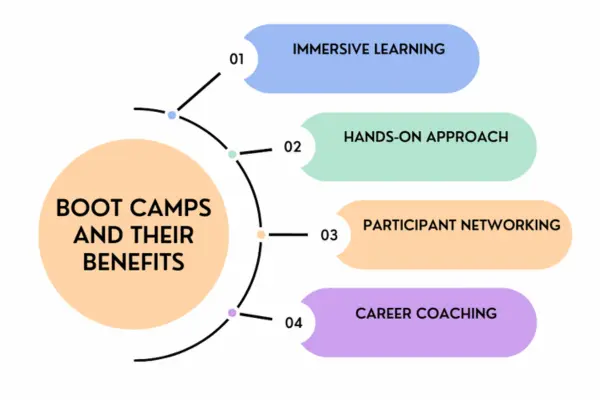
Bootcamp comparison: the major bootcamp types and how they change your decision
Bootcamps are not one category, because program design choices determine learning quality, stress level, and employment usefulness.
Comparing programs becomes easier when you label the type, because the type reveals what the provider is optimized for and what risks you should watch closely.
Common bootcamp formats
- Full-time cohorts, because they maximize immersion, yet they require significant schedule flexibility and recovery.
- Part-time cohorts, because they fit working professionals better, yet they demand long-term consistency and strong self-management.
- Self-paced programs, because they can be cheaper, yet they often fail without feedback loops and accountability structures.
- Mentor-led or hybrid models, because they combine content with support, yet support quality varies widely across providers.
Delivery modes and what to verify
- Live instruction: verify instructor quality and pacing, because live does not automatically mean effective.
- Recorded instruction: verify practice density, because passive video libraries often produce low retention without structured assignments.
- Remote: verify asynchronous norms and support response time, because remote learning can either be calm and flexible or isolating and confusing.
- In-person: verify facilities, commute burden, and community expectations, because logistics can quietly reduce consistency.
How to choose a bootcamp using reliable criteria instead of marketing language
Marketing rewards confidence, while learning rewards clarity, so your job is to replace slogans with evidence.
A good bootcamp decision is essentially a risk assessment, because you are investing time, money, and identity in a program that may or may not deliver what you need.
Reliable criteria are boring on purpose, because boring criteria measure the mechanics that create outcomes.
The 10 criteria that predict bootcamp quality
- Role alignment: the curriculum matches the outputs required in your target job.
- Practice density: the program forces you to do real work, not just watch.
- Project quality: projects resemble real deliverables and require independent decisions.
- Assessment standards: rubrics, feedback rules, and expectations are clear.
- Instructor credibility: teaching is structured, and examples reflect real constraints.
- Support design: there is a reliable way to get unblocked and get feedback.
- Career services realism: support exists, and claims are specific, not magical.
- Outcome transparency: reporting is clear about who is included and what “placed” means.
- Time feasibility: schedule, workload, and pacing fit your life.
- Contract and financing terms: costs, refunds, and obligations are understandable and fair.
Curriculum checklist: how to judge what you will actually learn
A syllabus is a contract with your future self, because it predicts whether you will gain usable skills or just familiarity.
Strong programs define outcomes per module, because module-level outcomes prevent content dumping and support progressive skill building.
Syllabus review checklist
- Module objectives are concrete, because “understand” is vague while “build and explain” is measurable.
- Prerequisites are stated plainly, because hidden prerequisites create dropout and self-doubt.
- Practice appears weekly, because spaced practice builds retention and skill.
- Projects increase in complexity, because progression requires constraints and trade-offs.
- Tool choices match the target market, because irrelevant tools reduce employability.
- Quality topics exist, such as debugging, testing, documentation, and communication, because real work includes more than building the happy path.
- Time estimates include assignments, because underestimating homework is a common failure point for busy learners.
The “output audit” for curriculum
Outputs reveal reality, because a program that cannot name what you will produce often cannot teach it reliably.
- List the deliverables you will complete, because deliverables become your portfolio evidence.
- Check whether deliverables resemble real job outputs, because toy projects create fragile confidence.
- Verify independent work is required, because copy-along projects hide gaps until interviews.
- Confirm you will write and explain decisions, because communication is part of job readiness in most roles.
Projects and outcomes: how to tell if the portfolio will be credible
Projects matter because they are your proof, and proof is what hiring teams can evaluate when you are switching careers.
Portfolio credibility comes from specificity, constraints, and results, not from polish alone.
Portfolio project quality checklist
- Projects have a clear problem statement, because vague projects produce vague interviews.
- Projects include constraints, because real-world work is always constrained by time, resources, and trade-offs.
- Projects require decision-making, because judgment is what employers test during interviews.
- Projects include measurable results when possible, because outcomes strengthen credibility and storytelling.
- Projects produce artifacts, such as write-ups, plans, documentation, or demos, because artifacts show how you work.
Questions to ask about projects
- “How many projects will I finish, and what are the expected outputs for each one.”
- “Which projects are team projects versus individual projects, and how is individual contribution made visible.”
- “Do projects include requirements gathering, trade-offs, and documentation, or are they mostly build-only.”
- “What does a strong project submission look like, and can you show an example of a high-quality final deliverable.”
- “How do you prevent students from building identical portfolios that blend together.”
Instructor credibility and teaching quality: what to verify beyond charisma
Good teaching is structured, because structure reduces confusion and creates reliable progression.
Real expertise is useful when it becomes teachable, because experience without pedagogy can become fast talking and skipped steps.
Teaching quality checklist
- Lessons include definitions and mental models, because mental models help you adapt when problems change.
- Examples include mistakes and debugging, because learning to recover builds real competence.
- Trade-offs are discussed, because mature work is choosing between imperfect options.
- Assignments are explained clearly, because unclear instructions create dropout and wasted time.
- Pacing feels appropriate for your level, because pace mismatch creates overwhelm even when content is good.
Fast test: what to ask for before paying
- Ask to see a sample lesson or workshop, because direct exposure reveals teaching quality quickly.
- Ask what beginners struggle with most, because honest answers signal real support design.
- Ask how feedback is delivered, because feedback quality often determines whether you improve or stall.
Support and feedback: the quiet factor that decides completion
Most learners quit when they get stuck, not when the topic is too hard, so support systems matter more than many people expect.
Support can be live, asynchronous, or peer-based, yet it must be reliable and responsive to protect your momentum.
Support checklist
- Clear channels exist, because “community” is vague while “office hours twice weekly” is specific.
- Response-time expectations are stated, because slow help can turn one stuck moment into a lost week.
- Feedback is structured, because “looks good” is less useful than rubric-based corrections.
- Peer learning is organized, because random group chats often become noise.
- Accommodations and accessibility are addressed, because learning quality depends on fit with your needs.
Questions to ask about getting unblocked
- “What happens when I’m stuck for more than an hour on a project.”
- “How many instructors or mentors support a cohort, and what is the typical ratio.”
- “How is feedback delivered, and what does a good feedback example look like.”
- “What support exists outside live sessions for working professionals in different time zones.”
Career support: separate useful services from vague promises
Career services can be valuable when they are concrete, practiced, and realistic, rather than motivational.
Good career support helps you produce proof, build a narrative, and practice interviews, while also setting expectations about timelines and market conditions.
Career services checklist
- Resume and profile support includes specific edits, because generic advice is easy and low impact.
- Interview practice is included, because interviews are a distinct skill that requires repetition.
- Portfolio review exists, because proof quality matters when you are competing for junior roles.
- Networking guidance is ethical and practical, because “DM 200 people” is not a plan.
- Job search strategy is structured, because structure prevents burnout and scattershot applications.
- Support continues after graduation for a defined period, because job searches can take time.
Questions to ask about outcomes and support
- “How do you define placement, and what counts as a successful outcome.”
- “What time window do you use for outcomes reporting, and who is included or excluded.”
- “What happens if a graduate needs extra time, and what support remains available.”
- “Which employer relationships exist, and how are introductions actually made.”
- “How do you help students who struggle with confidence and interviewing, not just with technical content.”
Contract basics: what to read so you do not get trapped
Contracts and financing terms are part of the product, because they determine the true cost and risk of the bootcamp.
Reading the contract carefully is not pessimism, because it is responsible decision-making when money and time are on the line.
Common bootcamp cost structures
- Upfront tuition, because it is simple and predictable if you can afford it.
- Installment plans, because they spread cost but can carry fees and strict terms.
- Income share agreements, because they shift risk but can cost more long term and include complex definitions.
- Deferred tuition models, because they may have conditions tied to outcomes or timelines.
Contract items to check line by line
- Total cost and what is included, because hidden fees can change ROI fast.
- Refund policy and deadlines, because early misfit is common and should not ruin you financially.
- Deferral or pause options, because life interruptions happen and policies determine whether you can recover.
- Attendance and completion requirements, because “job guarantee” language often depends on strict compliance.
- Outcome definitions, because “placement” can be defined in ways that inflate marketing claims.
- Dispute resolution terms, because you want to know how conflicts are handled.
- Data and privacy policies, because your personal and career information should be handled responsibly.
Questions to ask before signing anything
- “If I withdraw, what do I owe, and how is that calculated.”
- “If I need to pause, what happens to my tuition, support access, and graduation timeline.”
- “If you offer job-related guarantees, what exact steps must I complete, and what exactly do you provide in return.”
- “Are there any fees beyond tuition, including exam fees, tools, or required subscriptions.”
Comparison matrix: score bootcamps objectively
A scoring matrix reduces hype because it forces you to compare programs using the same criteria.
Weights help because not all factors matter equally, especially for a career changer balancing risk, time, and financial constraints.
How to use the matrix
- Pick 2–4 bootcamps to compare, because too many options creates noise and analysis paralysis.
- Assign weights from 1–3 based on your priorities, because your life season determines what matters most.
- Score each criterion from 1–5 using evidence, because “feelings” should be written down as hypotheses, not treated as facts.
- Write short evidence notes, because notes prevent you from being swayed later by a great sales call.
Bootcamp comparison matrix template
| Criterion | Weight (1–3) | Bootcamp A (1–5) | A Weighted | Bootcamp B (1–5) | B Weighted | Bootcamp C (1–5) | C Weighted | Evidence notes |
|---|---|---|---|---|---|---|---|---|
| Curriculum matches target role outputs | 3 | |||||||
| Practice density and homework realism | 3 | |||||||
| Project quality and portfolio credibility | 3 | |||||||
| Instructor quality and teaching structure | 2 | |||||||
| Support and feedback responsiveness | 2 | |||||||
| Career services specificity and realism | 2 | |||||||
| Outcome transparency and reporting clarity | 2 | |||||||
| Schedule feasibility for my life | 3 | |||||||
| Contract fairness and refund clarity | 3 | |||||||
| Price-to-value fit for my budget | 3 | |||||||
| Total |
Red flags: how to spot bootcamp hype before it costs you
Red flags matter because bootcamps are high-emotion purchases, and high-emotion purchases are where hype thrives.
One red flag is not always fatal, yet multiple red flags together are usually a sign you should slow down and demand evidence.
Marketing red flags
- Guaranteed job claims, because no program controls hiring outcomes.
- Pressure to decide fast, because urgency is often used to prevent careful comparison.
- Vague “life-changing” testimonials without specifics, because outcomes should be measurable and defined.
- Refusal to share curriculum details, because secrecy often protects weak structure.
- Claims that effort will be easy, because real learning requires practice and discomfort.
Curriculum and project red flags
- Projects are mostly copy-along, because copying builds familiarity without independent skill.
- Assignments lack rubrics, because vague standards produce vague learning.
- Prerequisites are unclear, because hidden assumptions create confusion and shame.
- Tool focus dominates without fundamentals, because tools change and fundamentals transfer.
Career services red flags
- Career support is described as “we help,” without explaining how, because vague support is often minimal support.
- Outcomes reporting excludes many students without clarity, because unclear reporting can inflate marketing claims.
- Networking advice is spammy, because spammy tactics damage reputation and rarely create strong opportunities.
Contract red flags
- Refund terms are confusing, because confusion increases risk when you discover misfit early.
- Job guarantee clauses require extreme compliance, because many guarantees are designed to be difficult to qualify for.
- Financing terms are unclear or avoid questions, because unclear money terms are a hard stop for responsible decisions.
Questions to ask on calls, in writing, and to alumni
Questions work best when you ask for examples, because examples reveal what happens in reality rather than what the sales script says.
Triangulation helps because different people can tell different stories, so patterns matter more than one perspective.
Questions to ask the program team
- “What does a typical week look like, including homework, and what do successful students do differently.”
- “What percentage of time is practice versus lecture, and what types of practice are required.”
- “How do you handle students who fall behind, and what support exists to help them recover.”
- “What are the three most common reasons learners struggle, and how do you address each one.”
- “Can you show me the project rubrics and what a strong submission looks like.”
Questions to ask alumni or current students
- “What surprised you most about workload and pace, and what would you do differently now.”
- “How responsive was support when you were stuck, and how often did you get actionable feedback.”
- “Did the projects feel like real work, and did you feel confident explaining trade-offs in interviews.”
- “How helpful was career support, and what parts were genuinely effective versus generic.”
- “If you could change one thing about the program, what would it be.”
Questions to ask yourself to avoid self-sabotage
- Do I have the time to practice outside the sessions, because practice is where competence is built.
- Am I buying structure or am I buying reassurance, because reassurance fades while structure can compound.
- Can I commit to the schedule without sacrificing health, because burnout destroys the ROI of any program.
- Do I have a plan to build proof weekly, because proof is what I will use in interviews and networking.
Sample scenarios: choosing the right bootcamp for your situation
Different contexts change the best choice, so comparing programs should start from your reality rather than from someone else’s timeline.
Scenario 1: you work full-time and need a sustainable plan
- Prefer part-time programs with predictable pacing, because sustainability matters more than speed when your schedule is full.
- Prioritize strong support and clear assignment standards, because limited time means you must avoid wandering while stuck.
- Choose programs with realistic workload transparency, because “part-time” can still hide full-time homework.
Scenario 2: you have runway and want an intensive transition
- Prefer full-time cohorts with high practice density, because immersion is most valuable when it produces proof fast.
- Prioritize projects that resemble real role outputs, because job readiness depends on output credibility.
- Evaluate career services carefully, because full-time intensity without job search structure can still stall after graduation.
Scenario 3: you are anxious about wasting money after a bad past experience
- Require a sample lesson and a syllabus, because evidence is how you stop buying hype.
- Prefer programs with clear refund terms and pause options, because flexibility reduces risk when life changes.
- Use the scoring matrix and wait one day before deciding, because delayed decisions reduce impulsive purchases.
Decision checklist: how to choose a bootcamp without overthinking forever
This checklist is designed to end analysis paralysis, because endless comparison is its own cost.
- Write your target role theme in one sentence, because relevance starts with clarity.
- Collect 10–20 job postings and list common required skills, because that gives you an external reality check.
- Compare 2–4 bootcamps using the matrix, because structured comparison prevents hype drift.
- Ask for project outputs, rubrics, and workload expectations, because those predict real learning quality.
- Verify support responsiveness and ratios, because getting stuck is the most common failure mode.
- Read contract and refund terms carefully, because money terms are part of the product.
- Talk to at least two alumni if possible, because patterns across alumni reveal reality faster than marketing.
- Choose the program that best fits your life constraints, because the best curriculum is useless if you cannot complete it.
After you enroll: how to protect your ROI and avoid the common bootcamp failure loop
Many people lose ROI not because the program is terrible, but because they underestimate consistency, portfolio building, and interview practice.
A simple execution system keeps you steady, because steady beats intense in most learning journeys.
Bootcamp success plan in 6 habits
- Schedule study blocks early, because unscheduled work disappears first.
- Ship one artifact weekly, because artifacts become portfolio proof and interview material.
- Maintain a “questions list,” because capturing blockers prevents spiraling and improves support usage.
- Ask for feedback on specific work, because specific feedback accelerates improvement more than general encouragement.
- Practice explaining projects out loud, because interviews reward clarity and decision narratives.
- Track energy and adjust workload, because burnout is the fastest path to quitting and regret.
Final note and independence disclaimer
Choosing a bootcamp is a high-stakes learning decision, so the safest approach is skeptical, criteria-based comparison focused on curriculum, projects, support, outcomes, and contract clarity.
Notice: This content is independent and has no affiliation, sponsorship, or control over any institutions, platforms, or third parties mentioned.